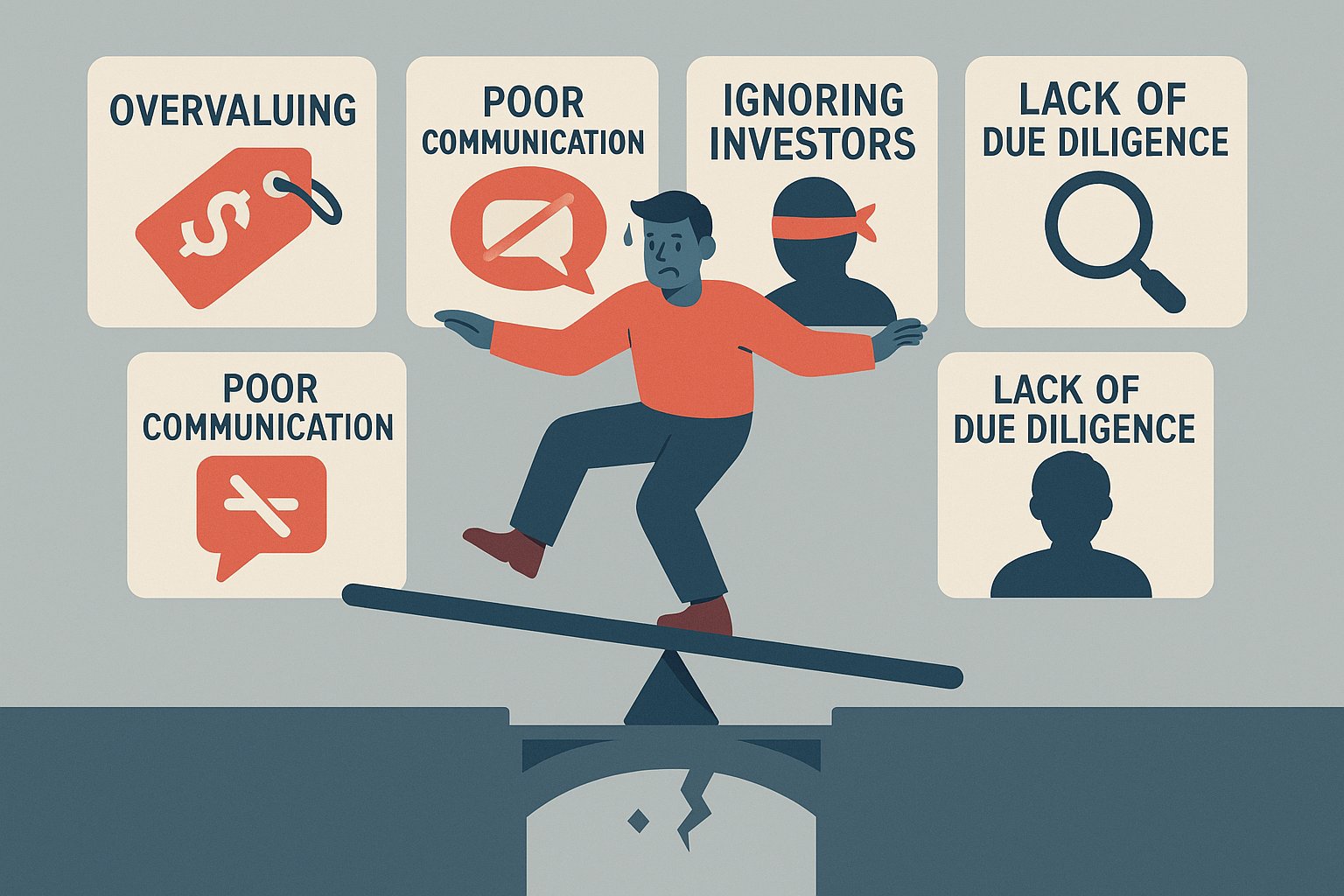

Every founder carries a story—one built through risks taken, lessons learned, pivots made, and milestones earned. When raising equity, that story becomes one of your strongest assets. Investors don’t just evaluate what you’re building today; they evaluate who you’ve become because of what you built before. Past startup experience, whether successful or riddled with challenges, gives you credibility, perspective, and resilience that first-time founders haven’t yet developed. The key is learning how to communicate that experience with clarity and power. Every investor wants to reduce uncertainty. When you show that you’ve already navigated the chaos of building something from nothing, you instantly lower their perceived risk. You become a founder who has seen both the mountain peaks and the valleys of entrepreneurship—and knows how to keep climbing. Leveraging past experience isn’t about flaunting your history; it’s about showing how that history shapes your strategy today. When you learn to turn your entrepreneurial journey into investment confidence, you unlock an advantage few founders realize they possess.
Telling Your Founder Story With Confidence and Purpose
Storytelling is one of the most powerful tools in an equity raise, and your founder story sits at the center. This story is not a résumé or a timeline—it is a narrative that reveals how your entrepreneurial past shaped your judgment, sharpened your instincts, and forged your leadership style. Investors don’t want generic summaries; they want to understand the emotional and intellectual journey behind the founder they are backing. Your past startup experience gives you the ability to speak with authority about perseverance, customer discovery, product development, team management, and operational chaos. When you describe past challenges with honesty and clarity, investors see someone who can spot problems early, adapt quickly, and avoid predictable mistakes.
When you describe your victories—not in boastful form but in strategic context—they see someone capable of identifying opportunities and executing effectively. Your founder story becomes even more compelling when it demonstrates growth. Investors want to feel that each step in your entrepreneurial history contributed to a refined vision, stronger discipline, and improved judgment. When communicated well, your past experience becomes a narrative arc that inspires trust, respect, and confidence. It tells investors exactly why you are the right person to lead this venture forward.
Building Credibility Through Hard-Won Lessons and Real Traction
Past startup experience gives you a unique advantage: real-world lessons. These lessons act as a foundation investors rely on to predict whether you will navigate the next chapter with competence. Investors know the difference between a founder who has studied entrepreneurship and a founder who has lived it. When you explain how past mistakes shaped your operational improvements, financial discipline, product strategies, or market approach, you demonstrate maturity and self-awareness—two traits investors value deeply. They don’t expect perfection; they expect pattern recognition. Your previous ventures, even the ones that didn’t succeed, give you insight into hiring pitfalls, customer misalignment, pricing miscalculations, and the dangers of chasing vanity metrics. These are the kinds of experiences that cannot be taught in classrooms or books. They come from the trenches. Traction from past startups also becomes part of your credibility. Whether you built a user base, closed enterprise partnerships, raised capital previously, or generated meaningful revenue, these accomplishments show investors that you can do it again. Even small wins matter, because investors are not looking for guarantees—they are looking for indicators. When you highlight the lessons, skills, and insights that emerged from your entrepreneurial past, you build a credibility profile that strengthens your entire pitch.
Demonstrating Execution Ability Through Proven Operational Strength
One of the greatest fears investors have is poor execution. A brilliant idea means very little without a founder capable of bringing it to life. Past startup experience gives you an opportunity to demonstrate execution ability in a way first-time founders cannot. You can point to actual examples of how you built processes, hired teams, created structure, managed cash flow, launched products, or scaled customer acquisition. These tangible proof points reduce investor uncertainty dramatically. Execution isn’t about perfection; it’s about momentum, consistency, and adaptability. If you’ve executed before, investors believe you will execute again. When preparing for your equity raise, reflect on the operational systems you built in previous ventures. Maybe you developed a rigorous customer feedback loop that shaped product development. Maybe you created an efficient sales pipeline that lowered acquisition costs. Maybe you built automation frameworks, internal dashboards, or cross-functional collaboration patterns that improved team productivity. These examples show operational depth and leadership maturity. The more clearly you articulate your execution track record, the more investors see a founder with not just ideas—but the capability to turn those ideas into reality.
Founder-market fit has become one of the strongest predictors of startup success, and past experience is one of the clearest indicators. If your current venture aligns with markets you’ve operated in before, you gain immediate credibility. Investors want founders who understand their industry deeply—its rhythms, its challenges, its customer psychology, and its competitive dynamics. Your previous experience allows you to show that you are not simply entering the market—you are returning to it with stronger insight. For example, if your last startup served the same customer segment, you now understand their pain points with greater precision.
If you worked within the same industry, you recognize regulatory hurdles, partnership opportunities, or pricing structures that newcomers overlook. Even if your past startup operated in a different space, transferable skills still matter. The ability to acquire customers, design products, and manage growth applies across markets. Founder-market fit is not limited to subject expertise; it includes passion, network, timing, and intuition. When you explain how your entrepreneurial past shapes your understanding of today’s problem, you strengthen your pitch significantly. Investors feel confident knowing your insight is not theoretical—it comes from lived experience.
Converting Your Past Network Into a Strategic Fundraising Advantage
Every startup journey expands your network. Past co-founders, team members, investors, advisors, customers, mentors, and partners become part of your relational capital. This network is incredibly valuable when raising equity for your new venture. Investors view strong networks as indicators of influence, credibility, and future opportunity. Your network can serve as early validators of your new venture, offering recommendations, introductions, or even participation in your current round. They can help amplify your message, strengthen your due diligence response, or offer third-party confirmation of your leadership. If your past investors choose to back you again, it becomes one of the strongest social proof signals you can possibly send. Even if they don’t, the fact that they are willing to speak positively on your behalf is an advantage. Beyond investors, your network may include strategic partners, early adopters, suppliers, technology contacts, or industry experts who can accelerate your go-to-market strategy. When you leverage these relationships intentionally, you show investors that your new venture is supported by a powerful ecosystem. The strength of your network communicates that you are not building alone—you are building with momentum, resources, and trusted allies.
Positioning Yourself as a Low-Risk, High-Trust Founder
Equity raises are fundamentally about risk evaluation. Investors are constantly assessing whether the founder presents low risk relative to the potential reward.
Past startup experience allows you to position yourself as a founder who reduces uncertainty and enhances predictability. You show that you are familiar with the realities of startup chaos. You understand cash cycles, hiring challenges, customer acquisition hurdles, and the emotional toll of building a business. This expertise makes you a safer bet. Investors know that first-time founders are often overly optimistic, inexperienced in crisis management, or unaware of common pitfalls. A founder with past experience, however, demonstrates an evolved decision-making style. You can speak intelligently about market timing, cost structures, break-even points, unit economics, or competitive strategy because you’ve lived through the consequences of misjudgment before. Your maturity becomes an asset. Your calm under pressure becomes a signal. Your strategic clarity becomes a differentiator. When investors feel that you are a leader who makes informed, measured, and honest decisions, they categorize you as low risk. And the lower your perceived risk, the easier it becomes to raise equity at stronger terms.
Transforming Your Experience Into a Compelling Equity Story
Every equity raise is ultimately a story—your story, your company’s story, and the market’s story, woven together into one persuasive narrative. The key to leveraging past startup experience is integrating it seamlessly into that narrative. You are not recounting history; you are explaining how history shapes your ability to execute today. The story you craft should illustrate evolution. It should demonstrate that each step in your entrepreneurial journey contributed to your current leadership strength, strategic thinking, and execution capacity. When investors see that your past experience directly fuels your future success, they feel confident supporting your vision. Your story becomes more than a pitch—it becomes a testament to resilience, insight, commitment, and long-term value creation. This is why investors back experienced founders with greater conviction. They are not just betting on a company. They are betting on a founder who has demonstrated the power to turn setbacks into strategies, risks into opportunities, and ideas into outcomes. When you position your past experience as the foundation for your future success, your equity raise becomes far more compelling—and far more successful.