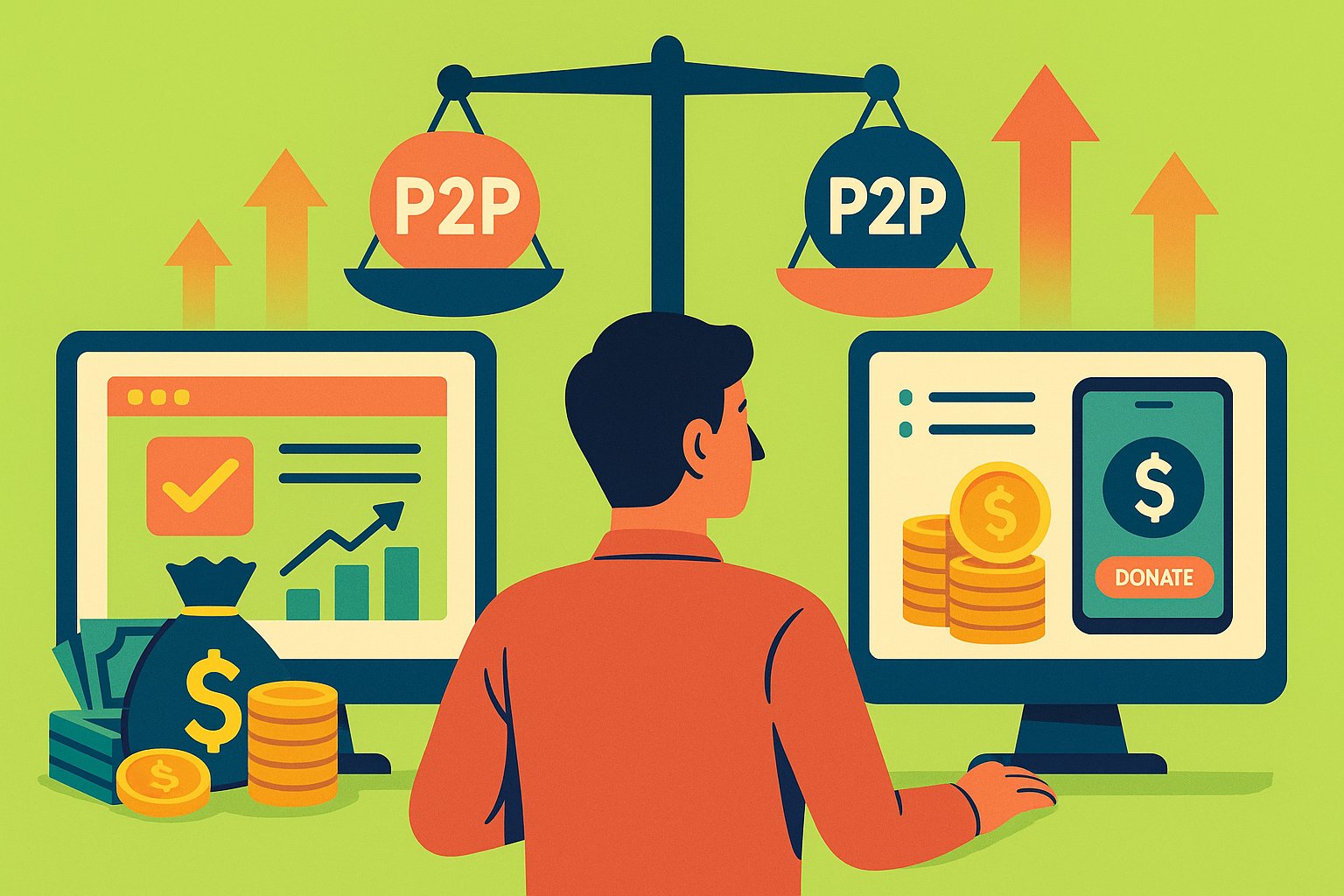

Analyzing loan listings is one of the most important skills investors can develop in peer-to-peer lending, debt crowdfunding, and alternative credit markets. A loan listing is far more than a collection of numbers on a screen—it is a story about a borrower’s financial habits, stability, motivations, and likelihood of repaying what they owe. When investors learn to read that story deeply and intelligently, they drastically reduce default risk and strengthen long-term returns. In today’s lending environment, platforms provide more data than ever before. Borrower histories, employment patterns, credit scores, loan purposes, financial statements, and even behavioral indicators appear inside detailed listings. The challenge isn’t the lack of information—it’s knowing how to interpret it. Some listings look strong at first glance but hide risk beneath the surface, while others seem modest yet reflect responsible borrowers with consistent habits.
Understanding the Core Elements of a Loan Listing
Every loan listing contains essential components that reveal the financial character of the borrower. These elements vary by platform, but typically include credit history, income verification, debt levels, loan purpose, employment details, and repayment terms. Understanding these components is the foundation of effective loan analysis.
Credit history remains one of the strongest indicators of repayment behavior. While credit scores offer an at-a-glance ranking, the details behind the score matter more. Past delinquencies, length of credit history, and credit utilization provide context that helps investors assess the borrower’s long-term habits. A borrower with a long record of on-time payments signals responsibility, while one with a short credit history or recent delinquencies carries more uncertainty.
Income verification helps establish whether the borrower has the financial strength to support their monthly payments. Stable income, especially when paired with manageable expenses, suggests a low likelihood of default. Conversely, inconsistent earnings, high obligations, or vague employment information indicate elevated risk.
Debt-to-income ratios are another critical indicator. Even strong income can be overshadowed by excessive debt, and borrowers with heavy financial obligations may struggle when unexpected life events arise. Investors who carefully examine these ratios gain insight into the borrower’s financial resilience.
Loan purpose adds another layer. Borrowers who seek funds for responsible reasons—such as consolidating high-interest debt or making home improvements—often present lower risk than those pursuing speculative or discretionary expenses. In business loans, understanding the purpose helps investors evaluate whether the funds support sustainable growth or temporary relief.
Every piece of information in a loan listing helps form a holistic picture. When analyzed collectively, these components reveal not only the borrower’s financial strength but their underlying reliability.
Digging Deeper into Borrower Behavior and Financial Stability
While loan listings include quantitative data, they also contain behavioral indicators that influence repayment likelihood. These behavioral signals often reveal more about default risk than traditional credit metrics because they show how borrowers manage money and handle financial challenges.
Patterns of late payments across credit cards, auto loans, or previous personal loans highlight potential future issues. Even if these payments were small, they reflect habits that may resurface. Conversely, borrowers with a steady record of on-time payments—even with average credit—often exhibit the discipline necessary to meet monthly obligations.
The length of credit history influences predictability. Borrowers with a long-established record provide more insight into long-term behavior. Short credit histories create uncertainty, particularly when coupled with significant borrowing. Investors should look for consistency and gradual growth rather than rapid credit expansion, which may indicate financial strain.
Employment stability is another powerful predictor. Borrowers with long-term positions in reliable industries, steady business revenue, or consistent freelancing income provide a stable base for repayment. Frequent job changes or employment in unstable sectors introduce unpredictability.
Cash-flow discipline also surfaces in bank statements and spending patterns when platforms provide them. Some platforms categorize expenses and income trends, allowing investors to see whether the borrower maintains a positive monthly cash flow. Borrowers who regularly overspend or maintain low cash reserves may struggle during unexpected financial disruptions.
Analyzing borrower behavior requires reading between the lines. Stable habits, thoughtful loan purposes, and steady income create a compelling story of repayment. Irregular behavior, rapid debt accumulation, or unstable employment signals deeper risk—even when surface-level numbers look appealing.
Evaluating Platform Risk Grades and Underwriting Models
Every loan listing is supported by a platform’s internal risk grade, which reflects the probability of default based on underwriting systems. These grades guide investors, but they should be evaluated alongside your own analysis to ensure alignment with your risk tolerance.
Some platforms rely on traditional underwriting models that emphasize credit score, income verification, and debt ratios. These platforms typically produce conservative, reliable grades that are easy to interpret. Their loan listings provide clear indicators of borrower quality, and their underwriting systems focus on proven financial metrics.
Other platforms incorporate advanced algorithms and alternative data sources. These may include cash-flow analysis, behavioral spending patterns, industry-specific data, or machine learning predictions based on historical loan performance. These systems often identify risk more accurately, but they may be less intuitive for investors who prefer traditional indicators.
Risk grades should be viewed as a structured starting point rather than a final decision. Investors who rely solely on platform ratings may overlook key details in individual listings that do not fit the algorithm’s typical pattern. Conversely, investors who distrust platform grades entirely may miss out on high-quality opportunities that algorithms identify more efficiently than manual reviews.
Understanding how each platform assesses risk helps investors interpret listings with more depth. Platforms with transparent underwriting models offer clearer guidance and give investors the ability to match their own evaluations with internal grading. This synergy between human judgment and algorithmic prediction strengthens default prevention and improves overall portfolio performance.
Spotting Red Flags Hidden in Loan Listings
Even well-structured listings may hide warning signs that signal elevated default potential. These red flags are not always glaring; often, they appear as subtle inconsistencies or questionable patterns that require attention.
One common red flag is recent credit expansion. Borrowers who have opened several new accounts or significantly increased their credit utilization in a short period may be experiencing financial stress. If a borrower has multiple recent inquiries, increasing balances, or newly opened credit lines, investors should proceed cautiously.
Another warning sign is inconsistent employment history. Frequent job changes, vague job titles, or incomplete employment details suggest instability. While some industries naturally involve short-term contracts, borrowers who switch roles unpredictably may struggle during economic slowdowns.
Loans with unclear or overly ambitious purposes also present risk. Borrowers who describe vague goals, speculative ventures, or large-scale projects without supporting details require deeper scrutiny. Business loan listings that lack financial statements, revenue patterns, or cash-flow documentation create uncertainty that could lead to repayment issues.
High debt-to-income ratios, even when paired with solid credit scores, signal strain. Borrowers carrying significant financial obligations may appear stable until an unexpected event disrupts their budget. When debt levels overshadow income stability, the risk of default increases.
By learning to identify red flags early, investors weed out risky listings before committing capital. These subtle indicators can significantly influence long-term portfolio health when applied consistently across many loan selections.
Assessing Loan Structure, Terms, and Repayment Dynamics
Loan listings reveal not only borrower details but the structure of the loan itself. Understanding repayment terms helps investors minimize default risk by selecting loans with predictable dynamics.
Loan duration plays a major role. Shorter loan terms reduce exposure to long-term uncertainty and economic shifts. They also return principal more quickly, allowing for reinvestment and enhanced compounding. While longer terms may offer higher interest rates, they extend risk exposure and require stronger confidence in the borrower’s stability.
Interest-rate structures influence both return and risk. Listings with unusually high rates often indicate higher-risk borrowers or less stable financial behavior. While these loans may appear attractive, investors must weigh the likelihood of default against potential yield. Lower interest rates typically accompany stable borrowers and offer more predictable outcomes.
Repayment schedules matter as well. Loans with amortizing structures—where borrowers pay principal and interest monthly—reduce risk by consistently lowering the outstanding balance. Bullet repayment loans, where the borrower pays interest throughout but repays principal at the end, introduce more uncertainty. Bullet loans often require collateral or strong financial backing to mitigate elevated risk.
Collateral-backed loans present another dimension of safety. Real estate, equipment, invoices, or business assets can provide security, but investors must evaluate the strength of the collateral and its value relative to the loan. A strong collateral position can dramatically reduce default losses, while weak or speculative collateral may offer little protection.
Analyzing loan structure helps investors select listings aligned with their risk tolerance and return expectations. When repayment dynamics are clear and stable, default risk naturally decreases.
Combining Data, Intuition, and Strategy for Smarter Decisions
Analyzing loan listings to minimize default risk is both an art and a science. Data provides the foundation, but investor intuition, experience, and long-term strategy elevate the decision-making process.
Investors who track their loan outcomes develop pattern recognition. They begin to sense which listings reflect stable borrowers and which contain subtle warning signs. Over time, this intuition strengthens and becomes a competitive advantage.
Combining platform insights with personal evaluation creates a hybrid approach that surpasses either method alone. Algorithms offer precision, but they cannot always interpret borrower motivations, context clues, or patterns that defy typical models. Human analysis fills these gaps, allowing investors to refine choices with nuance.
A strategic framework supports this process. Investors who define goals—whether income, stability, or high growth—analyze listings with clarity. They choose borrowers, loan structures, and risk levels that support long-term outcomes rather than short-term impulse.
Consistency also matters. Evaluating listings with the same criteria across many investments builds a more resilient portfolio. Over time, this leads to steady returns, fewer defaults, and reduced emotional decision-making.
The most powerful investors blend data-driven analysis with disciplined strategy and personal insight. Together, these elements transform loan selection from guesswork into a refined, confident investment practice.
Turning Deep Loan Analysis into Long-Term Success
Loan listings are the gateway to a diversified, income-generating portfolio, but only when interpreted with care, strategy, and thoughtful analysis. Borrower data, financial history, income stability, credit behavior, loan structure, and platform insights each contribute to a full-picture understanding of risk. By learning to analyze these components deeply, investors reduce default rates, improve return stability, and enhance the long-term compounding power of their portfolios. This process transforms lending from a passive activity into an intentional strategy rooted in clarity. In a financial world filled with opportunity, those who master the skill of evaluating loan listings discover greater confidence, improved outcomes, and the ability to navigate changing markets with ease. The goal is not perfection but informed decision-making—choosing borrowers whose stories indicate reliability and aligning those choices with your investment vision. With disciplined analysis and a steady focus on risk, investors unlock the long-term potential of alternative lending. They build portfolios that withstand uncertainty, support sustainable growth, and deliver monthly income with reliability and purpose.