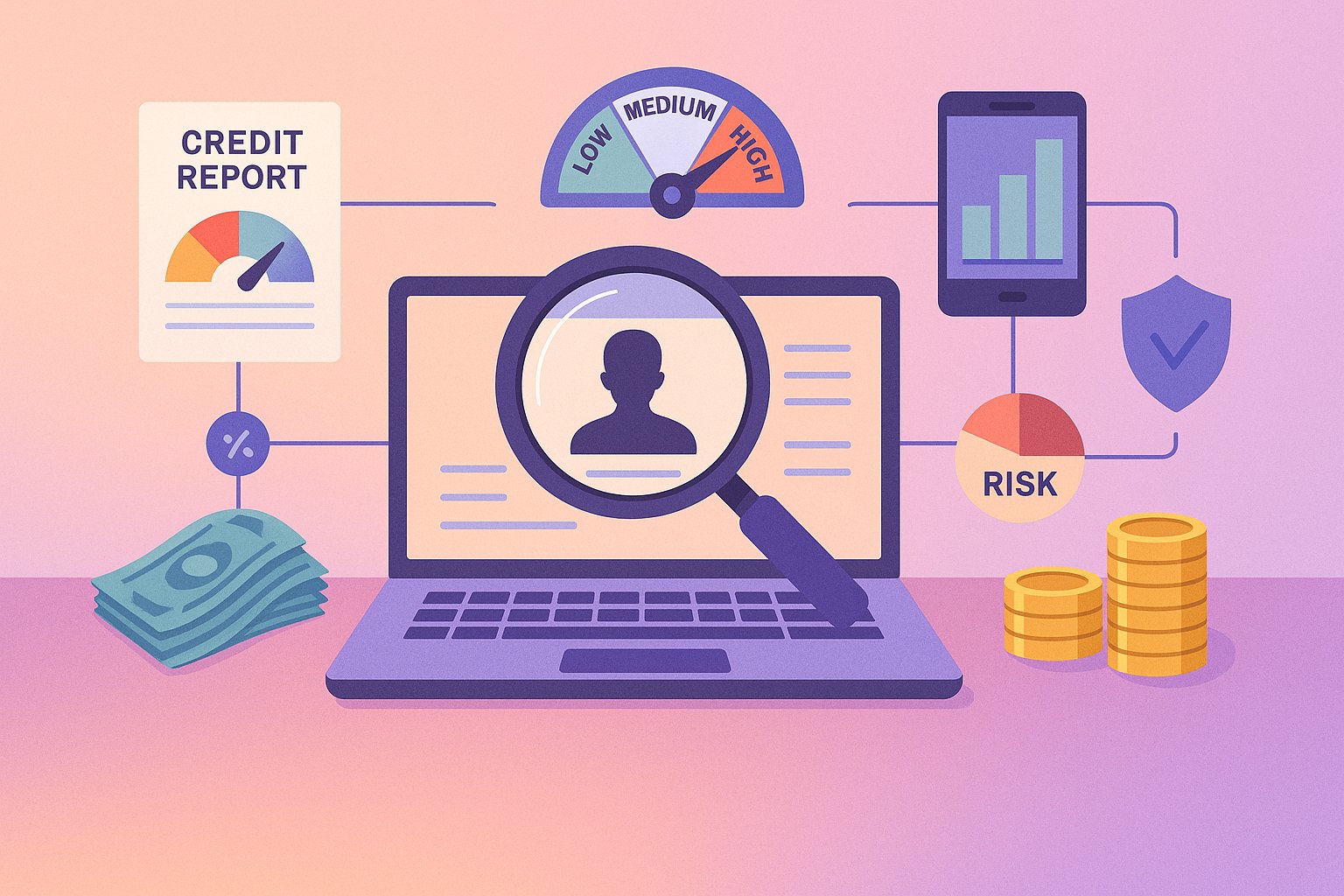

In the world of lending, risk is the invisible thread that ties together the decisions of both borrowers and lenders. Every loan is a balancing act: borrowers seek affordable access to funds, while lenders seek confidence that they will be repaid. To bridge this gap, financial institutions and debt crowdfunding platforms use a system called risk tier classification. This framework ranks borrowers into categories based on their perceived creditworthiness, shaping everything from interest rates to approval odds. For borrowers, these classifications can open doors or create barriers. A favorable tier can mean quick approvals and low costs, while a lower tier often results in higher interest rates or outright rejection. For lenders, risk tiers provide a map for navigating uncertain terrain. By grouping borrowers into categories, investors can assess potential returns against potential defaults, making informed decisions that align with their tolerance for risk. Understanding how these classifications work—and their impact on both sides of the lending equation—is essential in today’s marketplace.
Breaking Down the Mechanics of Risk Tiers
Risk tier classification is not a single metric but a holistic evaluation. It combines credit scores, payment histories, income levels, debt-to-income ratios, and other financial indicators into a comprehensive profile. Platforms and institutions then use algorithms, statistical models, and sometimes human judgment to assign borrowers to tiers such as “prime,” “near-prime,” or “subprime.”
The higher the tier, the lower the perceived risk. Borrowers in prime categories typically enjoy lower interest rates, longer repayment terms, and greater borrowing limits. Those in subprime categories face higher costs, shorter terms, and stricter scrutiny. Some platforms even use finer-grained systems, assigning letter grades or numerical scores that give investors more detail. This process is not just about protecting lenders. It also ensures that borrowers are matched with loans they are more likely to repay. By assigning terms aligned with risk profiles, platforms aim to create sustainable lending relationships that benefit both parties. However, the classification process also highlights disparities—borrowers with weaker financial profiles often find themselves paying much more for the same access to capital.
The Borrower’s Perspective: Opportunities and Challenges
For borrowers, risk tier classification feels deeply personal because it directly affects the affordability and accessibility of credit. Those placed in favorable tiers benefit from lower borrowing costs, which can significantly reduce financial strain. For instance, a business raising funds in the prime tier may pay half the interest rate of a peer classified as subprime. Over time, these differences add up to thousands of dollars saved—or lost.
Lower-tier borrowers also face the challenge of perception. Being labeled as higher risk can make attracting investors more difficult, particularly in debt crowdfunding where lenders often choose campaigns based on tier classifications. Borrowers may be forced to offer higher returns to entice backers, which increases their cost of capital. This creates a cycle where those who most need affordable credit find themselves burdened with higher expenses.
At the same time, risk tier classification provides clarity. Borrowers can see where they stand and understand the areas they need to improve. For example, reducing credit utilization, building a stronger payment history, or diversifying credit accounts can all help move an applicant into a better tier. In this way, risk tiers can serve as both a barrier and a roadmap toward greater financial health.
The Lender’s Perspective: Balancing Reward and Security
For lenders and investors, risk tier classification simplifies decision-making in a complex landscape. Instead of analyzing every borrower in exhaustive detail, lenders can rely on tiers to filter opportunities. A prime borrower may offer lower returns, but the reduced likelihood of default provides peace of mind. A subprime borrower offers potentially higher returns but at the cost of greater uncertainty.
This trade-off defines the lending marketplace. Some investors prioritize stability, choosing only the highest-rated borrowers. Others embrace risk, seeking higher yields from lower-tier applicants. The beauty of risk tier systems is that they allow both strategies to coexist, giving lenders the freedom to align their portfolios with personal goals and risk tolerance.
However, reliance on risk tiers is not without its pitfalls. Classifications are based on past behavior and current conditions, but they cannot predict the future with certainty. Economic downturns, industry shifts, or unexpected life events can turn a prime borrower into a default risk. Conversely, a subprime borrower may outperform expectations with strong discipline and resilience. For this reason, savvy lenders view risk tiers as guides, not guarantees.
The Influence of Risk Tiers on Interest Rates and Loan Terms
Perhaps the most visible effect of risk tier classification lies in the cost of borrowing. Interest rates are closely tied to perceived risk, with higher tiers receiving lower rates. For example, a prime borrower might secure a loan at 6 percent, while a subprime borrower could be charged 18 percent or more for the same amount. Loan terms also vary. Higher-tier borrowers may enjoy longer repayment periods, flexible structures, or larger borrowing limits. Lower-tier borrowers, on the other hand, often face shorter repayment windows and smaller loan amounts, designed to reduce exposure for lenders. These terms directly impact a borrower’s ability to manage debt effectively.
In debt crowdfunding platforms, risk tiers play an even more prominent role. Campaigns often display borrower classifications prominently, allowing investors to filter opportunities by risk level. This transparency helps investors manage portfolios but also influences borrower outcomes. Campaigns in higher tiers often attract funds quickly, while lower-tier campaigns may struggle to gain traction without offering significant incentives.
The Broader Economic and Social Implications
Risk tier classification is more than just a financial tool—it has broader economic and social consequences. For businesses, it can determine whether expansion projects move forward or stall. For individuals, it can shape opportunities for education, housing, or entrepreneurship. The classifications influence who gets access to affordable credit and who is excluded or burdened by high costs.
Critics argue that risk tiers can perpetuate inequality. Borrowers with limited resources often have weaker credit histories, pushing them into lower tiers where borrowing is more expensive. This creates a cycle that is difficult to escape. Advocates for reform suggest incorporating alternative data—such as utility payments, rental histories, or even digital transaction behavior—into assessments to provide a more holistic view of creditworthiness.
On the other hand, supporters of risk tier systems argue that they are essential for protecting lenders and maintaining trust in financial markets. Without clear risk assessments, defaults would rise, discouraging investment and reducing access to capital for everyone. The challenge lies in striking a balance between fairness and financial prudence.
Strategies for Borrowers and Lenders in a Tiered System
For borrowers navigating risk tier classifications, the key strategy is proactive improvement. Building a history of timely payments, reducing debt levels, and diversifying credit profiles are proven ways to climb into better tiers. Launching a debt crowdfunding campaign with a higher classification not only reduces costs but also increases the likelihood of attracting investors quickly.
Lenders, meanwhile, can use risk tiers as part of a diversified approach. Allocating capital across multiple tiers balances the stability of prime borrowers with the higher returns of riskier applicants. Platforms often provide tools to help investors spread exposure, reducing the impact of individual defaults. By treating risk tiers as a starting point rather than the final word, lenders can craft portfolios that maximize both security and opportunity. Both sides benefit from transparency. Borrowers who understand their classification can set realistic expectations, while lenders who interpret tiers critically avoid being lulled into a false sense of security. When used wisely, the system creates a marketplace where capital flows efficiently, risks are understood, and opportunities are shared.
Building Trust Through Risk Transparency
At its core, risk tier classification is about building trust. Borrowers want to be trusted with funds, and lenders want assurance that their money is secure. The classification system provides a common language that allows both sides to engage with clarity and confidence. While no system is perfect, risk tiers create structure in a complex world. They help lenders evaluate opportunities quickly and help borrowers understand what they need to improve. When defaults occur—and they inevitably do—the presence of risk tiers ensures that investors entered with awareness, reducing surprise and frustration. As lending continues to evolve through technology and crowdfunding platforms, risk tier classification will remain central. The future may bring refinements, incorporating more data and context, but the fundamental principle will endure: understanding risk is the foundation of lending. For both borrowers and lenders, mastering this system is not just about navigating today’s challenges but about building sustainable financial relationships for the future.