
For decades, investors were taught that diversification meant holding a balanced mix of stocks, bonds, and perhaps a sprinkle of real estate or commodities. The idea was simple: spread your risk so no single investment could sink your portfolio. While that advice still holds true, the financial world has evolved. New asset classes—once reserved for institutions or the ultra-wealthy—are now open to everyday investors. Among the most exciting of these opportunities are revenue sharing assets.
What Are Revenue Sharing Assets?
Revenue sharing assets are investment instruments that allow investors to earn a percentage of a business’s top-line revenue, typically for a defined period or until a target return multiple is achieved. Unlike equity, which represents ownership and fluctuates with company valuation, revenue sharing is tied directly to the money coming in. If a company earns revenue, investors receive their share—often monthly or quarterly.
This structure aligns investor returns with company performance in a tangible way. For instance, if you invest in a restaurant through a revenue share agreement, you might receive 3% of its gross monthly sales until your investment has been repaid at a certain multiple—say 1.5x or 2x. For the business, it’s a form of growth capital that doesn’t dilute ownership. For the investor, it’s a chance to participate in cash flow without waiting for a liquidity event.
Revenue sharing assets can take many forms. They might involve small businesses raising capital on crowdfunding platforms, music royalties tied to streaming revenue, film or entertainment projects sharing ticket or licensing income, or even renewable energy projects distributing a share of power generation revenue. This model stands out for its simplicity and transparency. You’re not speculating on valuation swings—you’re participating in real revenue streams. That direct connection between capital and cash flow makes revenue sharing one of the most intuitive and accessible forms of alternative investing today.
Why Revenue Sharing Fits the Modern Investor
In a world of market volatility, inflation, and unpredictable monetary policy, investors are seeking stability. Traditional equities can deliver high returns, but they also come with sharp corrections. Bonds offer safety, but often at the expense of yield. Revenue sharing assets fill the gap between these extremes by providing exposure to real-world income generation. The appeal lies in the combination of three traits: tangibility, alignment, and diversification. First, revenue sharing assets are often linked to tangible businesses and projects that investors can understand—restaurants, e-commerce brands, local franchises, or creative ventures. This clarity contrasts with the abstract complexity of derivatives or algorithmic funds.
Second, alignment matters. In revenue sharing deals, investors and entrepreneurs are on the same side of the table. The business doesn’t pay investors unless it earns revenue, creating a natural incentive for both parties to drive growth and efficiency. Unlike debt, where fixed payments can strain a business during slow months, revenue-based repayments flex with performance.
Finally, diversification becomes richer and more multidimensional. Instead of relying solely on capital markets, investors can participate in cash-generating ventures across multiple industries. A portfolio that includes equity, debt, and revenue sharing can capture income from entirely different economic engines—some public, some private, some local, some global.
How Revenue Sharing Compares to Equity and Debt
To understand where revenue sharing fits into your investment strategy, it helps to compare it with more familiar asset types—equity and debt. Equity investing means ownership. You buy shares in a company, hoping they’ll increase in value over time. Your upside is theoretically unlimited, but so is your patience. Many startups take years to exit, and some never do. You’re betting on future growth, not immediate income. Debt investing, on the other hand, is about lending. You provide capital and receive interest payments over time. Your returns are fixed and predictable—but capped. You don’t share in the upside if the company thrives, and you still bear risk if it fails.
Revenue sharing blends the best of both worlds. Like debt, it provides recurring payments tied to performance. Like equity, it shares in success without enforcing rigid repayment schedules. Investors get exposure to real-time business activity while entrepreneurs retain flexibility and ownership.
From a portfolio construction standpoint, revenue sharing adds a middle layer—between the long-term growth of equities and the fixed income of bonds. It introduces cash flow diversity that can stabilize returns even when public markets fluctuate. This hybrid nature is particularly valuable in uncertain economic climates. When interest rates rise, bond values can drop; when markets fall, equities suffer. But revenue sharing assets, anchored in ongoing cash flow, can provide steady income regardless of market sentiment.
Accessing Revenue Sharing Opportunities
Ten years ago, investing in revenue sharing deals might have required private connections or large capital commitments. Today, technology has democratized access. Online investment platforms and crowdfunding portals now host revenue-based offerings across industries, allowing investors to participate with minimums as low as a few hundred dollars. These platforms vet issuers, structure repayment terms, and handle distributions automatically. Some focus on small business financing—offering stakes in local coffee shops, gyms, or retail stores. Others specialize in creative industries, renewable energy, or e-commerce brands. The variety gives investors flexibility to match their interests and risk tolerance.
When evaluating opportunities, investors should examine key factors such as the company’s revenue history, growth trajectory, and repayment multiple. A business with consistent monthly income and a moderate multiple (say 1.3x to 1.7x) may offer more reliable returns than one promising outsized payouts from a volatile industry.
Due diligence also includes understanding contract terms. How long is the repayment period? Are returns capped? What happens if revenue falls short? Reputable platforms provide full disclosures and investor dashboards to monitor progress over time. While accessibility has improved, the core principle remains unchanged: invest in what you understand. The beauty of revenue sharing is its transparency, but informed decision-making still separates successful investors from speculative ones.
The Risks and Realities of Revenue Sharing
Like any investment, revenue sharing isn’t risk-free. The most common risk is underperformance. If a company’s sales decline, your payments may shrink—or stop altogether until business recovers. There’s no guaranteed interest or principal return, and the company isn’t obligated to make payments beyond its actual revenue.
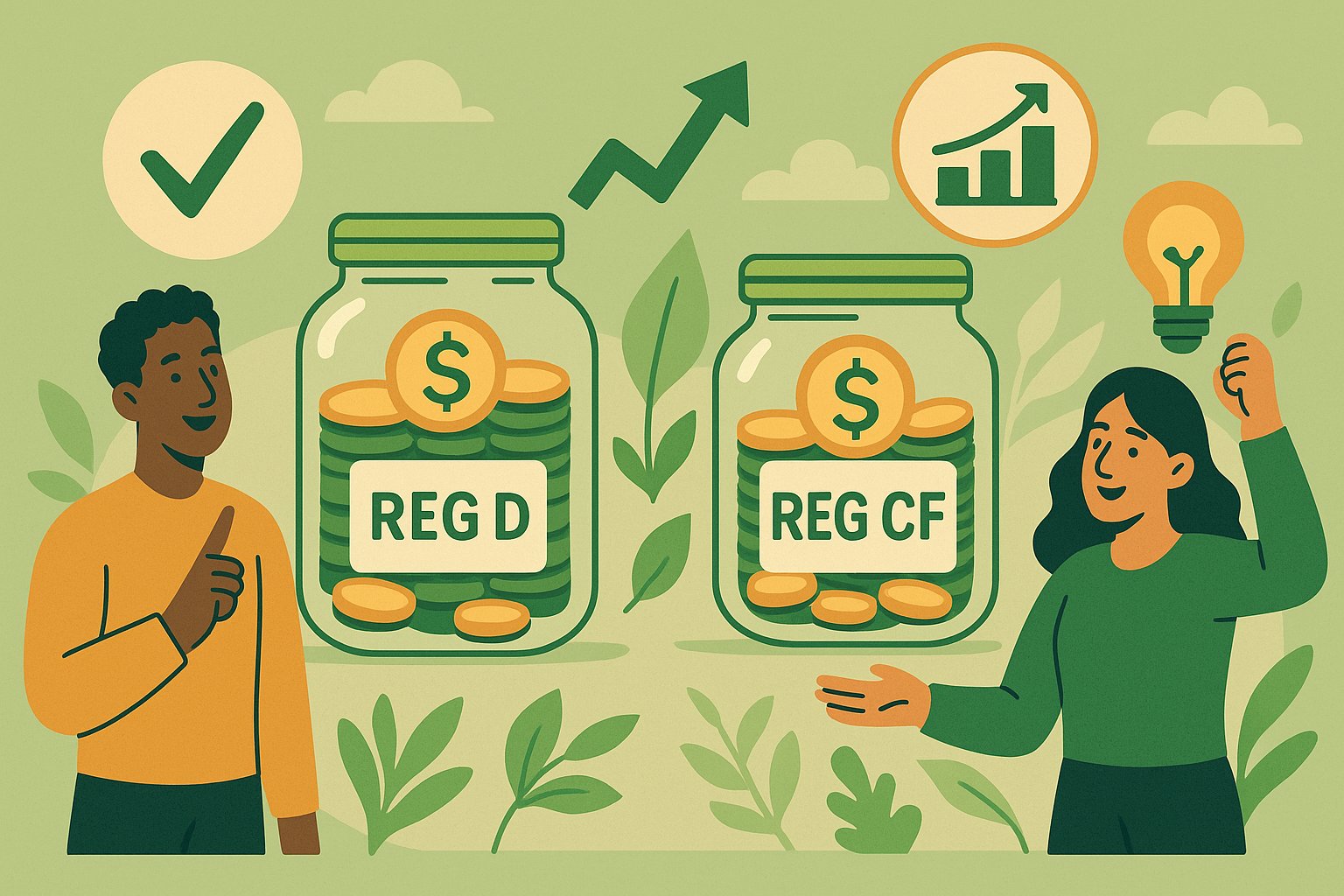
Another consideration is liquidity. Most revenue share agreements are private contracts that can’t be easily sold or traded. Investors should be comfortable holding their positions until full repayment or until the agreed multiple is achieved. There’s also the matter of regulation and due diligence. While reputable platforms are registered and compliant with securities laws, not every opportunity in the market meets those standards. Investors must verify that offerings are properly structured under exemptions such as Regulation CF, Regulation A+, or Regulation D.
Despite these risks, the model’s flexibility can also serve as protection. Because payments scale with performance, businesses are less likely to default completely compared to fixed loan obligations. This dynamic creates resilience in the relationship—businesses don’t crumble under debt pressure, and investors remain aligned with long-term success. In short, revenue sharing carries the same fundamental risk-reward equation as any investment: higher potential returns require accepting performance variability. But when approached thoughtfully and diversified across multiple deals, it can deliver steady income and uncorrelated value to your portfolio.
The Role of Revenue Sharing in Portfolio Strategy
The best investors think in terms of balance. A modern diversified portfolio might include traditional assets—stocks and bonds—alongside alternatives such as real estate, private credit, and venture capital. Revenue sharing adds yet another dimension: participation in active, cash-generating ventures that don’t move in lockstep with public markets. Strategically, revenue sharing can serve multiple roles. For income-focused investors, it provides regular cash flow that complements dividends or bond coupons. For growth-oriented investors, it offers a way to participate in high-potential businesses without waiting for exits or IPOs. For impact investors, it enables direct support for small businesses, entrepreneurs, and industries that align with their values.
The key is proportion. Allocating too much of your portfolio to any single alternative asset can increase risk. Many advisors suggest starting with small allocations—perhaps 5% to 15%—and expanding as experience and confidence grow. Diversifying across sectors, geographies, and revenue models further reduces concentration risk. For example, an investor might hold revenue shares in a local restaurant group, a clean energy project, and a digital media company. Each operates in a distinct market cycle, meaning downturns in one may be offset by stability in another. Over time, these recurring cash flows can compound into a meaningful layer of passive income that enhances overall portfolio resilience.
The Future of Revenue Sharing and Alternative Investing
The rise of revenue sharing assets reflects a broader shift in how people think about investing. The next generation of investors isn’t just chasing capital gains—they’re seeking participation, transparency, and impact. They want to know where their money goes, how it’s used, and how it contributes to tangible outcomes. Technology is accelerating this shift. Blockchain-based platforms, smart contracts, and tokenization are making revenue sharing even more efficient. Imagine investing in a music catalog or a solar farm and receiving your proportional revenue automatically, in real time, via a blockchain ledger. This fusion of finance and technology promises greater accessibility, liquidity, and accuracy in revenue distribution.
Regulatory evolution is also supporting growth. The expansion of equity crowdfunding under the JOBS Act has normalized alternative investments for retail participants. As investor education improves and platforms gain credibility, the barriers between traditional and alternative markets will continue to dissolve. Looking ahead, revenue sharing could become a mainstream pillar of portfolio diversification. It complements rather than replaces traditional assets, offering investors a way to blend income stability with entrepreneurial exposure. For businesses, it democratizes access to capital—bridging the gap between debt and equity in a way that benefits both sides.
Redefining Diversification for the Modern Investor
Diversification has always been about managing risk through variety. But in today’s interconnected markets, true diversification means looking beyond the conventional. Revenue sharing assets offer something unique: real participation in real businesses, with cash flow that responds to performance, not speculation. For investors, it’s an opportunity to step into the role of a partner rather than a passive shareholder. For entrepreneurs, it’s a funding model rooted in fairness, flexibility, and shared success. Together, these dynamics create a more human version of capitalism—one where investment and impact coexist naturally. As with any investment decision, success depends on diligence, patience, and balance. But for those ready to embrace the next frontier of diversification, revenue sharing assets represent more than an alternative—they represent evolution. In a world where markets can change overnight, owning a piece of real-world revenue might just be the most timeless strategy of all.