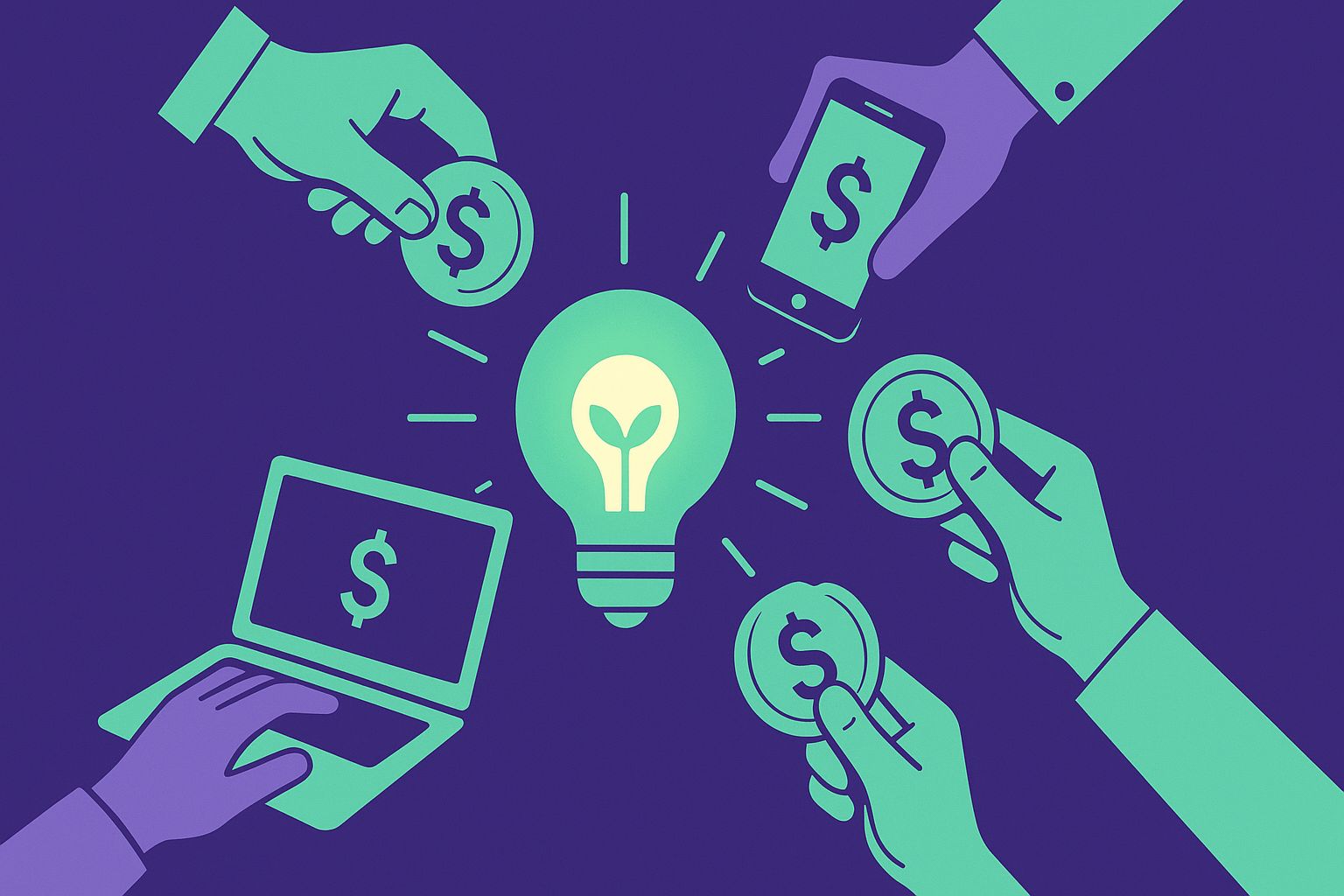

Crowdfunding has become one of the most influential financial and entrepreneurial systems of the modern internet era. What once seemed like a niche fundraising method for artists and independent creators has evolved into a massive global ecosystem involving startups, investors, technology companies, nonprofits, creators, consumers, and online communities. Today, crowdfunding powers everything from innovative gadgets and indie films to medical fundraisers, real estate projects, and billion-dollar startup launches. At its core, crowdfunding is built on a simple concept: large groups of people collectively contribute money to support an idea, project, business, or cause. Yet behind this seemingly straightforward process exists a highly interconnected ecosystem filled with platforms, payment systems, marketing strategies, creators, supporters, algorithms, social media dynamics, and financial regulations.
The Foundations of Crowdfunding and Why It Works
The crowdfunding ecosystem exists because technology dramatically changed how people connect, communicate, and exchange money. Before the internet, raising capital usually required access to banks, venture capital firms, publishers, production studios, or wealthy private investors. Most individuals lacked direct pathways to public financial support.
Crowdfunding disrupted that structure by allowing creators to present ideas directly to audiences online. Instead of relying on a small number of gatekeepers, campaigns could attract support from thousands of ordinary individuals contributing smaller amounts of money.
This model works because it combines emotional engagement with digital accessibility. People are naturally drawn to innovation, creativity, and meaningful causes. Crowdfunding platforms transform those interests into actionable financial support through streamlined online systems.
One of the ecosystem’s most important strengths is accessibility. A startup founder in a small town can now potentially reach supporters across the world. Independent filmmakers, musicians, designers, inventors, and entrepreneurs can present ideas globally without requiring massive upfront resources.
Crowdfunding also succeeds because it aligns closely with modern internet culture. Online audiences enjoy participation, community involvement, and direct interaction with creators. Crowdfunding transforms consumers from passive buyers into active supporters who feel emotionally invested in a project’s success.
The ecosystem thrives on trust and transparency as well. Successful campaigns typically communicate openly with supporters through updates, videos, social media engagement, and progress reports. This direct relationship creates a stronger emotional connection than many traditional business models.
At its best, crowdfunding democratizes opportunity. It allows great ideas to gain traction based on public enthusiasm rather than institutional approval alone.
The Major Players That Power the Crowdfunding Industry
The crowdfunding ecosystem consists of several major groups working together within interconnected digital systems. Understanding these players is essential for understanding how the industry functions as a whole.
Crowdfunding platforms sit at the center of the ecosystem. Companies such as Kickstarter, Indiegogo, and GoFundMe provide the infrastructure that allows campaigns to launch, collect payments, communicate with supporters, and distribute funding. Each platform operates differently depending on its audience and funding model.
Creators are another core component of the ecosystem. These individuals or organizations launch campaigns seeking financial support. They may be entrepreneurs introducing new products, artists funding creative projects, nonprofits raising donations, or startups seeking investment capital. Their ability to communicate vision, credibility, and excitement largely determines campaign performance.
Backers and supporters form the financial engine of crowdfunding. These are the people who contribute money to campaigns in exchange for rewards, emotional satisfaction, products, experiences, or investment opportunities. Backers are not simply customers. They are active participants in the growth of the ecosystem.
Payment processors and financial systems quietly power the industry behind the scenes. Secure online transactions, fraud protection, currency conversion, and global payment accessibility all play critical roles in enabling crowdfunding at scale.
Marketing agencies, influencers, content creators, and media outlets also hold significant influence. Many successful campaigns rely heavily on external visibility generated through digital advertising, press coverage, social media promotion, and influencer partnerships.
Manufacturers, fulfillment companies, shipping providers, and customer support systems become especially important for physical product campaigns. Once campaigns are funded, creators must actually deliver products successfully, making logistics and operations a vital part of the broader ecosystem.
Each piece of the crowdfunding world depends on the others. The ecosystem functions because creators, supporters, platforms, and service providers continuously interact in a digitally connected environment.
Exploring the Different Types of Crowdfunding
One reason crowdfunding has expanded into a multi-billion dollar industry is that the ecosystem now supports multiple funding models serving very different purposes. Crowdfunding is no longer limited to creative projects or startup ideas alone.
Reward-based crowdfunding remains one of the most recognizable forms. In this model, supporters contribute money in exchange for products, experiences, exclusive content, or other rewards. This system became extremely popular in technology, gaming, publishing, and design industries because it allows creators to fund production while simultaneously validating market demand.
Donation-based crowdfunding focuses on charitable causes, emergencies, medical expenses, community initiatives, and humanitarian efforts. Platforms dedicated to donation campaigns have helped millions of individuals raise money during difficult circumstances. Emotional storytelling and social sharing play major roles in this segment of the ecosystem.
Equity crowdfunding introduced a more investment-oriented approach. Instead of simply receiving rewards, supporters receive ownership stakes in companies. This transformed crowdfunding into a legitimate financial sector where startups can raise capital from large groups of smaller investors.
Debt crowdfunding, often called peer-to-peer lending, allows individuals or businesses to borrow money directly from groups of lenders online. This model bypasses some traditional banking structures and creates alternative financing opportunities.
Real estate crowdfunding has also grown rapidly. Investors can now collectively fund large property developments, apartment complexes, and commercial projects through online platforms. This opened real estate investing to broader audiences that previously lacked sufficient capital.
Each crowdfunding model attracts different audiences, regulations, risks, and expectations. Together, they create a highly diverse ecosystem that extends far beyond the original concept of internet fundraising.
The Critical Role of Storytelling and Community
While technology powers crowdfunding mechanically, storytelling powers it emotionally. One of the defining characteristics of the crowdfunding ecosystem is the enormous importance of narrative, branding, and community engagement.
Successful crowdfunding campaigns rarely focus only on financial goals or product features. Instead, they tell stories that inspire audiences to participate emotionally. Campaign creators must convince people not only that their idea is useful, but also that it matters.
Storytelling creates identity and connection within the ecosystem. Supporters want to feel part of a mission, movement, innovation, or creative journey. Crowdfunding campaigns often succeed because they transform financial contributions into emotionally meaningful participation.
Video content became especially influential in crowdfunding because it allows creators to communicate authenticity, personality, passion, and vision. A compelling campaign video can dramatically increase trust and engagement.
Community building also plays a central role. Crowdfunding campaigns thrive when supporters actively share projects with others, discuss updates online, and participate in the campaign’s momentum. Many campaigns become highly social experiences fueled by digital communities across platforms like Instagram, YouTube, TikTok, and Facebook.
This sense of participation creates loyalty that often extends beyond the campaign itself. Successful crowdfunded brands frequently develop highly engaged customer communities that continue supporting future products and projects long after funding ends.
Transparency strengthens this relationship even further. Backers appreciate creators who openly discuss challenges, delays, manufacturing updates, and progress milestones. Honest communication builds trust within the ecosystem and encourages long-term community support.
Crowdfunding is ultimately powered by human connection. The emotional relationship between creators and supporters is one of the ecosystem’s most valuable assets.
The Marketing Machines Behind Successful Campaigns
Many people assume crowdfunding success happens organically, but modern crowdfunding is heavily driven by sophisticated digital marketing strategies. Marketing has become one of the most important forces shaping the ecosystem.
Most successful campaigns begin building audiences long before launch day. Email lists, teaser campaigns, social media engagement, influencer partnerships, and landing pages are often developed months in advance. Creators understand that strong early momentum significantly improves campaign visibility and platform ranking.
Advertising plays a major role in today’s crowdfunding environment. Platforms such as Meta and Google provide targeted advertising systems that campaigns use to attract potential supporters. Crowdfunding campaigns frequently invest heavily in digital ads to drive traffic and conversions.
Public relations strategies are also common. Media coverage from blogs, technology websites, podcasts, YouTube creators, and online publications can generate massive attention for campaigns. Viral press exposure often creates explosive funding surges.
Influencer marketing has become another powerful force within the ecosystem. Social media personalities with engaged audiences can dramatically increase campaign credibility and visibility through reviews, demonstrations, or endorsements.
Analytics and data tracking are increasingly important as well. Campaign teams monitor audience behavior, conversion rates, traffic sources, and advertising performance constantly throughout funding periods. Crowdfunding campaigns now operate with many of the same marketing principles used in large-scale e-commerce businesses.
This evolution has made crowdfunding far more professionalized and competitive. Campaigns that lack strong marketing strategies often struggle even when their ideas are excellent.
The ecosystem rewards visibility, momentum, and audience engagement just as much as innovation itself.
Challenges and Risks Within the Crowdfunding Ecosystem
Despite its remarkable growth, the crowdfunding ecosystem also faces significant challenges. Not every campaign succeeds, and even funded campaigns can encounter serious problems after launch.
One of the ecosystem’s biggest risks is overpromising. Many first-time creators underestimate production complexity, shipping logistics, manufacturing timelines, or financial costs. Campaigns sometimes raise large amounts of money only to discover that fulfilling promises is far more difficult than expected.
Delays are extremely common, especially with technology and hardware products. Backers often become frustrated when campaigns fail to communicate transparently about setbacks or changing timelines.
Fraud and deceptive campaigns also create trust issues within the ecosystem. Although major platforms have implemented stronger moderation systems, scams and unrealistic projects occasionally damage public confidence.
Competition continues intensifying as crowdfunding becomes more mainstream. Thousands of campaigns compete for attention simultaneously, making visibility increasingly difficult for smaller creators with limited marketing budgets.
Regulation remains another evolving challenge. Equity crowdfunding, peer-to-peer lending, and investment-related campaigns must navigate complex financial laws designed to protect investors and consumers. Governments continue adjusting regulations as crowdfunding expands into larger financial markets.
Platform dependence can also create vulnerability. Creators often rely heavily on algorithms, platform policies, advertising systems, and payment processing structures outside their control. Changes to platform rules or visibility systems can significantly impact campaign performance.
Even with these challenges, the ecosystem continues growing because its underlying value proposition remains incredibly powerful. Crowdfunding offers opportunities that traditional financing and business systems often cannot provide.
How Technology Is Shaping the Future of Crowdfunding
The future of crowdfunding will likely be shaped by emerging technologies, global digital expansion, and evolving creator economies. The ecosystem is still relatively young compared to traditional financial systems, which means significant innovation remains ahead. Artificial intelligence may transform campaign creation, audience targeting, customer support, and marketing optimization. AI tools could help creators design better campaigns, predict audience behavior, and personalize supporter experiences more effectively. Blockchain technology and decentralized finance are also influencing parts of the ecosystem. Some platforms are exploring tokenized ownership systems, decentralized fundraising models, and blockchain-based transparency mechanisms that could reshape how crowdfunding transactions occur. Global internet access continues expanding as well. Millions of creators and entrepreneurs in emerging markets are gaining digital fundraising capabilities for the first time. This international growth could dramatically expand the ecosystem over the next decade. The creator economy is another major growth factor. Independent educators, artists, influencers, developers, musicians, and online personalities increasingly rely on direct audience support rather than traditional corporate structures. Crowdfunding fits naturally into this shift toward community-driven monetization. Hybrid crowdfunding models may also become more common. Campaigns could combine rewards, subscriptions, investment opportunities, and digital experiences within single ecosystems. Virtual reality, live-stream shopping, and interactive community engagement may further evolve how campaigns connect with audiences. What makes the crowdfunding ecosystem so fascinating is its adaptability. It continuously evolves alongside changes in technology, finance, culture, and consumer behavior. At its core, crowdfunding represents something much larger than fundraising alone. It reflects a global shift toward decentralized opportunity, direct audience connection, and community-powered innovation. The ecosystem succeeds because it allows people to collectively support ideas they believe in while giving creators new pathways to turn vision into reality. As digital economies continue expanding, crowdfunding will likely remain one of the most influential systems connecting creativity, entrepreneurship, technology, and human collaboration in the modern world.