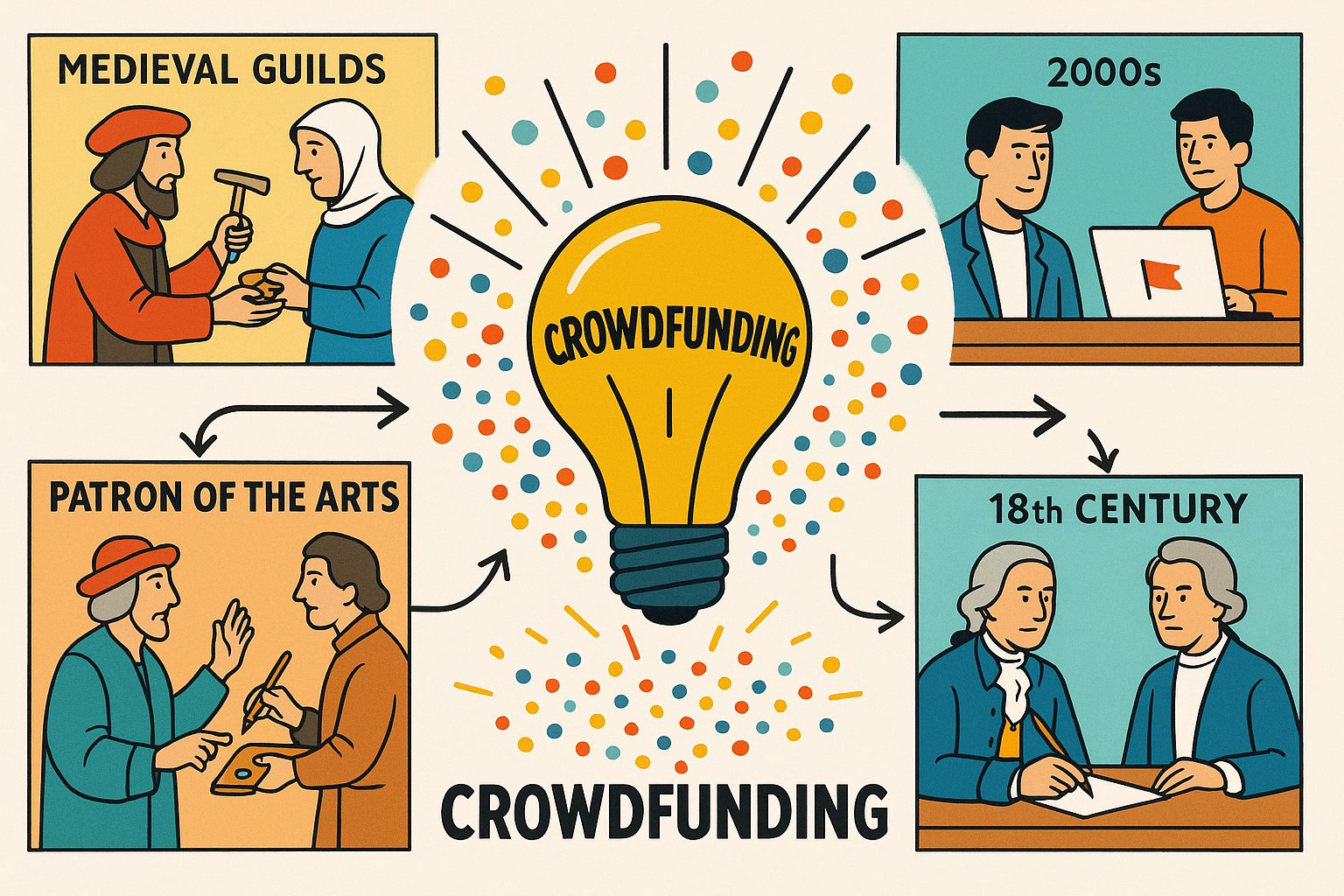

Long before crowdfunding became a digital phenomenon, the idea of people pooling their resources for a common cause has deep historical roots. Communities have always banded together to finance public projects, artistic endeavors, and humanitarian missions. In the 18th and 19th centuries, collective funding was often used to raise money for monuments, war efforts, and social causes. One of the earliest and most famous examples came in 1885 when Joseph Pulitzer launched a campaign through his newspaper, The New York World, urging ordinary citizens to donate toward the construction of the Statue of Liberty’s pedestal. More than 160,000 people contributed small sums—most under a dollar—and the campaign successfully raised over $100,000. This spirit of communal support foreshadowed what crowdfunding would one day become: the power of the many making possible what the few could not. Throughout the 20th century, the concept of shared funding continued to evolve. Musicians, inventors, and local community leaders would organize events and small-scale drives to support creative or entrepreneurial projects. These grassroots efforts, though modest, laid the groundwork for the online crowdfunding revolution that would emerge a century later. As the internet began connecting people on a global scale, the idea of collective patronage found a new, digital home.
The Digital Spark: Early Internet Movements
The modern history of crowdfunding begins in the late 1990s and early 2000s, when the internet started changing how money could be raised and shared. Artists were among the first to recognize the internet’s potential to bypass traditional gatekeepers. One of the earliest examples came from a British rock band named Marillion. In 1997, when they lacked the funds to tour the United States, fans organized an online fundraising campaign that generated $60,000—an extraordinary feat for the time. This event is often cited as one of the first true instances of online crowdfunding, showing that passionate communities could directly fund the art and experiences they valued most.
Soon after, platforms began emerging that formalized this process. ArtistShare, launched in 2001, became the first platform to allow fans to financially support musicians in exchange for behind-the-scenes access and creative updates. The site’s model not only helped artists fund their work but also created an emotional connection between creators and backers. This laid the foundation for the culture of transparency, storytelling, and participation that defines modern crowdfunding today.
The Rise of Crowdfunding Platforms
The early 2000s saw a digital transformation that expanded crowdfunding beyond music and art. The rise of social media, online payments, and global communication created fertile ground for new platforms. In 2008, Indiegogo launched as one of the first open crowdfunding platforms for all kinds of projects—from films and gadgets to humanitarian causes. It was quickly followed in 2009 by Kickstarter, which revolutionized the concept with its all-or-nothing funding model. Projects had to reach their stated funding goals to receive money, creating urgency and accountability that appealed to both creators and backers.
Kickstarter’s early success was meteoric. Within just a few years, it funded thousands of creative projects, from independent films to innovative technology. The Pebble smartwatch, for example, raised over $10 million in 2012, setting a record and capturing global attention. The success of these early campaigns legitimized crowdfunding as a serious financial model rather than a niche experiment. It also demonstrated how powerful storytelling, visuals, and social sharing could be in mobilizing large groups of people to fund ideas.
Expanding Horizons: Crowdfunding for Causes and Communities
As crowdfunding matured, it began branching out beyond creative projects and into the social sphere. GoFundMe, launched in 2010, shifted the focus toward personal and charitable causes. Unlike Kickstarter or Indiegogo, which emphasized tangible rewards, GoFundMe allowed users to raise funds for medical expenses, education, or community needs. This model resonated deeply with global audiences, transforming crowdfunding into a tool for empathy and humanitarian aid.
This era also saw the rise of platforms like Kiva, which connected lenders with small business owners and entrepreneurs in developing nations. By offering microloans as small as $25, Kiva empowered individuals to make a global difference. The success of these platforms proved that crowdfunding could transcend profit motives—it could foster social impact, mutual aid, and global cooperation. Whether it was rebuilding homes after natural disasters or helping students afford tuition, crowdfunding was rewriting the rules of philanthropy and personal finance.
The Legal Revolution: Equity Crowdfunding and Regulation
By the early 2010s, crowdfunding had proven its potential—but it was still largely limited to donations and rewards. Entrepreneurs began pushing for a model that would allow contributors to receive equity or ownership stakes in the ventures they supported. This shift marked the dawn of equity crowdfunding, blending traditional investing with the accessibility of online funding.
In the United States, a major breakthrough came in 2012 with the passage of the JOBS Act (Jumpstart Our Business Startups Act). This legislation allowed companies to raise limited amounts of capital from both accredited and non-accredited investors through regulated online platforms. It was a historic step that democratized investment opportunities, enabling everyday people to own shares in startups they believed in.
Platforms such as SeedInvest, StartEngine, and Republic emerged in the wake of this law, bringing equity crowdfunding into the mainstream. The movement spread internationally as well, with countries like the UK, Canada, and Australia developing their own frameworks to balance investor protection with innovation. For startups, this opened an entirely new funding pathway—one that combined the enthusiasm of crowdfunding with the structure of venture investment.
Global Expansion and Technological Innovation
By the mid-2010s, crowdfunding had grown into a multi-billion-dollar industry spanning art, technology, philanthropy, and finance. Platforms diversified their models to cater to different needs: reward-based, donation-based, debt-based, and equity-based crowdfunding all found their niches. As global internet access improved, developing countries began to embrace crowdfunding as a means of economic empowerment, particularly for small businesses and creative industries.
Technology continued to reshape the landscape. Blockchain and cryptocurrency introduced the concept of decentralized crowdfunding, removing intermediaries and allowing peer-to-peer transactions across borders. Smart contracts made it possible to automate funding releases when project milestones were met. These innovations hinted at a future where crowdfunding could become even more transparent and global, fueled by digital trust rather than traditional financial institutions.
Meanwhile, corporate giants and institutions began to take note. Even established companies started launching crowdfunding-style campaigns to gauge consumer demand before full production—a strategy now known as “crowd validation.” This approach not only reduced market risk but also turned customers into brand advocates, blurring the line between consumer and investor.
Cultural Shifts and the Power of Community
Beyond its financial mechanics, crowdfunding sparked a cultural shift in how people engage with entrepreneurship, creativity, and social good. It democratized innovation, allowing ideas to rise based on merit, storytelling, and shared values rather than access to elite networks or venture capital. Creators who once struggled to gain attention could now build global audiences directly through social media and crowdfunding platforms.
Crowdfunding also transformed the relationship between creators and consumers. Backers became collaborators, offering feedback, spreading awareness, and sharing in the excitement of the project’s success. Campaigns evolved into storytelling experiences—journeys of transparency where creators documented every stage of their progress. This sense of participation gave backers a feeling of belonging, turning them into loyal supporters who often funded multiple projects over time.
The rise of “cause crowdfunding” also mirrored broader social movements. From environmental sustainability projects to grassroots activism, crowdfunding became a megaphone for change. It empowered communities to act collectively on issues that traditional systems often overlooked, proving that small contributions, when multiplied by thousands, could drive massive impact.
The Modern Era and Beyond
Today, crowdfunding has matured into an essential pillar of the global economy. From creative ventures on Kickstarter to medical fundraisers on GoFundMe, it continues to redefine how money flows through society. In 2025, the crowdfunding ecosystem encompasses billions in global funding across countless sectors—technology, real estate, health, entertainment, and social innovation. Hybrid models now merge elements of equity and reward-based funding, giving backers both tangible products and financial stakes. The future of crowdfunding looks poised for even greater transformation. Artificial intelligence is helping creators predict campaign success and optimize their messaging. Blockchain technology is enabling global transparency and trust. And virtual reality is turning campaign storytelling into immersive experiences that allow backers to “step inside” a project before funding it. As traditional finance continues to evolve, crowdfunding’s spirit of inclusivity remains its most powerful legacy. It has shown that innovation doesn’t belong solely to corporations or wealthy investors—it belongs to everyone with an idea and a dream. From the Statue of Liberty’s pedestal to the digital platforms of today, crowdfunding represents the timeless human desire to build something meaningful together. Its history is a testament to what happens when technology, creativity, and community collide—a story still being written by dreamers and doers across the world.