
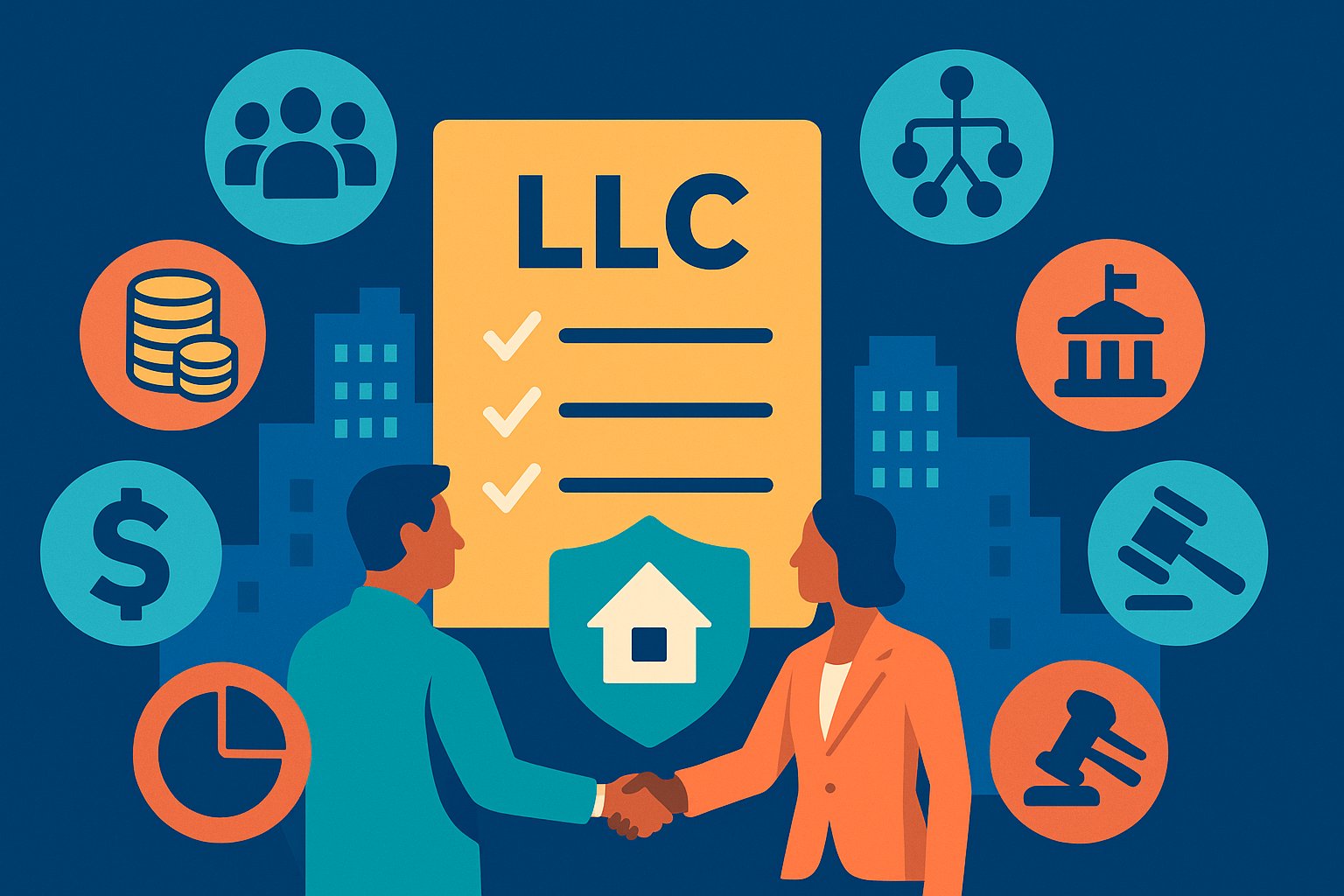
Exploring the Foundation: Why Operating Agreements Are Your Deal’s Backbone
Every crowdfunded investment built on an LLC structure relies on a carefully crafted operating agreement. Far more than a boilerplate legal document, the operating agreement is the blueprint that aligns sponsor objectives, investor protections, and regulatory compliance into a single cohesive framework. In a crowdfunding context—where dozens or even hundreds of passive investors entrust capital to a sponsor—it becomes critical to delineate rights, responsibilities, and expectations with laser precision. A robust operating agreement not only mitigates misunderstandings and legal disputes but also signals professionalism to potential backers, fostering confidence and repeat investments. By understanding the essential clauses that form the heart of these agreements, sponsors can structure transparent, resilient funds capable of navigating the complexities of modern real estate crowdfunding.
Defining Membership Interests and Capital Commitments
At the core of any operating agreement lies the definition of membership interests and capital commitments. This clause specifies each investor’s percentage ownership in the LLC, linking their equity stake to the capital they contribute. In crowdfunded deals, sponsors must decide whether to issue uniform membership units or to tier interests—perhaps granting early investors preferential terms or volume-based discounts. The agreement should also outline procedures for capital calls, late contributions, and remedies for payment defaults. Clarity here ensures that all parties recognize their financial obligations from Day One, preventing costly disputes over who owes what and when. Articulating these terms with precision helps sponsors manage cash flow smoothly during acquisition, renovation, and ongoing property operations.
Mapping Out Capital Contribution and Funding Obligations
Beyond defining initial commitments, operating agreements must address the mechanics of capital contributions throughout the investment lifecycle. Real estate projects frequently require additional funding for unexpected repairs, cost overruns, or tenant improvements. The capital contribution clause should specify notice periods for supplemental funding requests, maximum per-member exposure, and consequences of non-compliance—ranging from dilution of membership interests to mandatory buyouts. Sponsors often include a reserve account funded at closing, but reserves alone rarely cover all contingencies. Well-drafted funding obligations ensure that capital calls occur predictably and equitably, maintaining project momentum without placing undue burden on investors. Transparent rules for follow-on funding foster trust and reduce the risk of capital shortfalls during critical project phases.
Charting Profit and Loss Allocation Mechanisms
While contributions determine ownership percentages, the allocation of profits and losses translates project performance into investor returns—and tax consequences. Operating agreements typically follow the default partnership model of allocating profits and losses in proportion to membership interests, but sponsors may introduce special allocations for tax optimization or to reward specific achievements. For example, sponsors may retain a percentage of depreciation deductions or allocate management fees as operating losses benefiting investors in higher tax brackets. Any deviation from straight pro-rata treatment must comply with IRS “substantial economic effect” rules, ensuring allocations reflect economic reality. By thoughtfully designing allocation mechanisms, sponsors can enhance tax efficiency for investors while preserving a clear path for measuring project success.
Steering Cash Flow: Distribution and Waterfall Provisions
Distributions are the lifeblood of any LLC investment, translating net operating income and sale proceeds into tangible returns. Operating agreements must outline the timing and priority of distributions—whether monthly, quarterly, or upon key milestones. Many crowdfunded offerings incorporate waterfall structures, specifying that investors receive a preferred return before sponsors share in upside. Catch-up clauses then allow sponsors to “catch up” on performance-based splits once hurdles are met. A well-calibrated distribution waterfall balances investor protection with sponsor incentives, aligning interests throughout holding, refinancing, and exit phases. Clear distribution rules prevent confusion over who gets paid when and help sponsors manage cash reserves prudently, ensuring funds are available for operations even after distributions.
Governance Gear: Management and Voting Rights
In manager-managed LLCs common to crowdfunding, day-to-day decisions rest with the sponsor, but investors still require certain voting rights to protect their capital. Operating agreements should delineate which matters trigger investor votes—such as asset sales, refinancing, amendments to key terms, or removal of the manager. Sponsors must choose appropriate voting thresholds: simple majority, supermajority, or even unanimous consent for critical actions. Specifying notice requirements, quorum rules, and proxy voting procedures ensures that investor voices can be heard without bogging down operations. By balancing sponsor agility with investor oversight, governance clauses instill confidence and prevent unanticipated power struggles that could derail project execution.
Guardrails on Ownership: Transfer Restrictions and Buy-Sell Triggers
Preventing unwanted ownership changes is crucial in crowdfunded LLCs, where maintaining a qualified investor base and stable governance is paramount. Transfer restrictions often prohibit transfers without sponsor approval, require transferees to meet accredited investor criteria, and impose right-of-first-refusal provisions. Buy-sell triggers protect the LLC if a member dies, becomes insolvent, or faces litigation—offering a mechanism for the remaining members to purchase the departing interest at a fair price. These guardrails preserve the integrity of the membership and prevent third-party disruptions. A comprehensive transfer clause balances investor liquidity desires with the need to safeguard operational continuity and compliance with securities laws governing private offerings.
Planning the Endgame: Dissolution, Exit, and Buyout Clauses
An operating agreement must anticipate the LLC’s conclusion, whether via scheduled sale, refinancing, or other exit strategies. The dissolution clause lays out the timeline for asset disposition, distribution of sale proceeds, and winding-up procedures. Sponsors may include buyout provisions allowing members to force or participate in a sale under predefined conditions—such as receipt of a bona fide acquisition offer or expiration of the maximum hold period. Defining consent thresholds for exit events and establishing valuation methodologies for buyouts (appraisal, formula, or third-party determination) prevents conflict at the most critical juncture. A clear endgame framework ensures that investors understand how and when they will recoup their capital and any accrued profits.
Adapting to Change: Amendment and Approval Thresholds
Market dynamics, tax laws, or project realities may demand adjustments to operating agreements. Sponsors should build in amendment clauses specifying which provisions can be modified and the voting thresholds required—often a supermajority or unanimous consent for material changes. Non-material amendments, such as updating bank accounts or extending notice periods, may proceed with lower thresholds. By establishing a clear process for amendments, sponsors avoid ad hoc revisions that could undermine investor trust or trigger unintended tax consequences. A transparent amendment framework also enables the LLC to evolve alongside project needs, incorporating lessons learned and adapting to shifting market conditions without spiraling into disputes.
Resolving Disputes: Conflict Management Protocols
Even the best-laid plans occasionally collide with human dynamics. Including dispute resolution protocols—such as negotiation timelines, mediation, or binding arbitration—gives members a structured path to resolve disagreements without resorting to costly litigation. Some operating agreements designate a neutral third-party arbitrator or outline escalation steps, ensuring that conflicts over distributions, management decisions, or amendment proposals can be addressed efficiently. A well-defined dispute framework protects project momentum, preserves relationships among investors, and reduces legal expenses, empowering sponsors to focus on delivering returns rather than navigating courtroom battles.
Protecting the Team: Indemnification and Liability Shields
Sponsors and managers shoulder significant responsibilities in crowdfunded investments. Operating agreements typically include indemnification clauses that protect managers from liabilities arising from actions taken in good faith under the agreement. Conversely, investors may agree to indemnify the LLC for breaches of representations—such as misstatements of accreditation status. Insurance obligations, including directors and officers (D&O) coverage or general liability policies, complement indemnification by providing a financial safety net. Clear liability shields encourage qualified sponsors to lead projects confidently, knowing their personal assets are safeguarded when acting within the scope of their management duties.
Aligning with the Law: Tax, Accounting, and Reporting Requirements
Finally, operating agreements must address the practical mechanics of tax and financial reporting. Sponsors should specify the fiscal year, accounting methods (cash or accrual), and depreciation schedules to be followed. The agreement must also outline the timeline for preparing and distributing annual K-1 tax statements, audited financials (if required by investor thresholds), and interim performance reports. Including provisions for engaging third-party accountants, setting audit triggers, and allocating tax preparer fees ensures that the LLC remains compliant with IRS regulations and state filings. Robust reporting requirements enhance investor transparency, facilitating better decision-making and reinforcing trust in the sponsor’s stewardship.
Crafting Agreements That Drive Success
An effective LLC operating agreement for crowdfunded investments does more than tick legal boxes—it forges the alignment between sponsor expertise and investor expectations that underpins every successful property project. By meticulously defining membership interests, capital commitments, distribution waterfalls, governance protocols, and exit strategies, sponsors can steer clear of disputes, attract quality capital, and deliver predictable returns. Incorporating clear amendment processes, dispute resolution pathways, and robust reporting requirements further cements investor confidence, laying the groundwork for repeat offerings. In a competitive crowdfunding landscape, operating agreements that blend legal rigor with practical clarity become powerful differentiators—positioning sponsors to structure, execute, and exit deals with professionalism and precision.