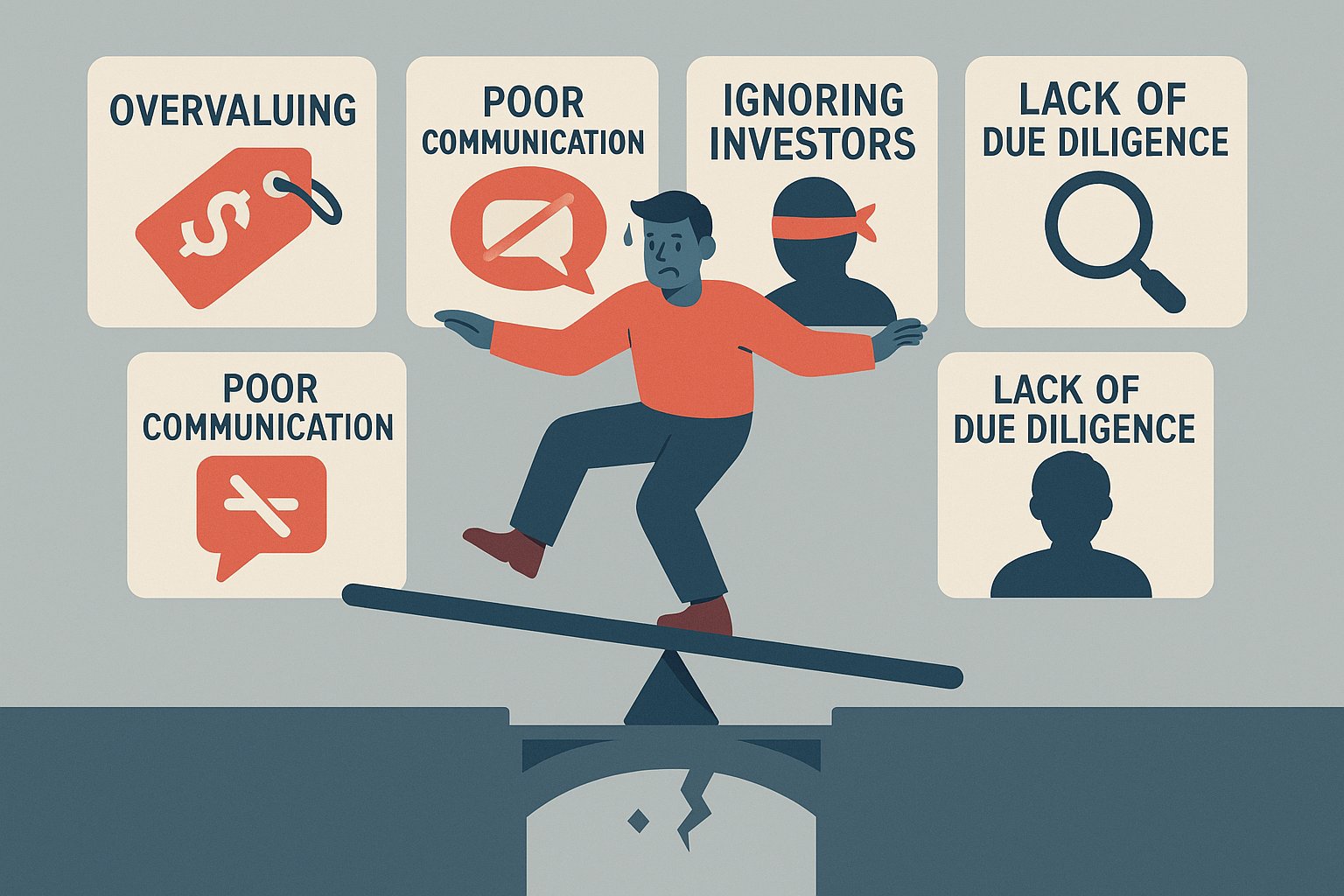

A due diligence review is one of the most defining moments in the lifecycle of any business seeking investment, acquisition, partnership, or major expansion. It is the moment when your company’s claims, numbers, strategy, and internal operations are examined with precision and professional scrutiny. Although intimidating for many founders, leaders, and teams, due diligence is also an incredible opportunity. It is a chance to demonstrate your readiness, your organization, your credibility, and the strength of the business you’ve been building day by day. Preparation is the secret weapon that transforms anxiety into confidence and transforms uncertainty into clarity. When you know what to expect, how to organize materials, and how to present your business transparently and strategically, the process becomes less of an interrogation and more of a powerful validation step. Due diligence is ultimately about truth—truth in your metrics, truth in your processes, and truth in your vision. The companies that perform best are the ones that prepare intentionally, communicate openly, and treat the review as a final proving ground. Understanding how to prepare not only strengthens your outcome but elevates the way you run your business long after the review is complete.
Building the Foundation: Organizing Your Internal House
Before you even receive the official due diligence checklist, the most important step is internal organization. Every document, contract, number, and record becomes part of the story you are about to tell. When your internal house is clean, consistent, and well-documented, the review process unfolds smoothly and efficiently. This begins with gathering your foundational legal documents: articles of incorporation, operating agreements, board minutes, stock records, founder agreements, and intellectual property assignments. These materials prove ownership, structure, and authority. Next, you move into your financial records—historical statements, projections, budgets, tax filings, revenue breakdowns, and accounting policies. Investors or acquirers need assurance that your numbers reflect reality and that your financial processes are mature. Operational documents follow close behind, including key contracts, supplier agreements, customer commitments, licenses, and compliance reports.
These reveal how your business functions day to day. What matters most is structure. When your internal documentation is organized, consistent, and easy to navigate, it signals to reviewers that your business is stable and well-managed. Organization removes doubt before it even has a chance to arise. Whether you run a startup or a more established business, the first phase of preparation is always internal housekeeping. And the more thoroughly you prepare here, the more confidently you step into the review itself.
Mastering the Numbers: Financial Readiness That Inspires Trust
Nothing defines a due diligence review more than the financial examination. Numbers tell a story, and they must be complete, accurate, and clearly presented. Preparing your financials is not about dressing them up—it is about ensuring they reflect the true health of your business. Start with your income statements, cash flow analyses, and balance sheets for the past several years or quarters. These documents reveal patterns, stability, margins, and operating strength. Reviewers look for consistency and transparency. They want to see whether revenue is recurring, one-time, diversified, or concentrated. They want to understand your expenditures, cash reserves, liabilities, burn rate, and runway. Projections also play a major role. Your forward-looking numbers should be supported by real data, realistic assumptions, market trends, and past performance. Overly aggressive projections raise skepticism, while grounded forecasts inspire confidence. In addition to this, your financial processes matter just as much as your financial outputs. Clean bookkeeping, consistent accounting practices, reconciled accounts, and documented internal controls show maturity. Sloppy numbers, missing receipts, or unexplained discrepancies create concern. Preparing financially means anticipating questions before they are asked, addressing gaps before they are spotted, and ensuring that your numbers build the strongest case possible. Mastery of your financials is one of the greatest assets in any due diligence journey.
Crafting a Compelling Operational Narrative
Operations matter more than many founders realize. While financials tell one part of the story, your operational systems tell another: how your company actually works, how reliable it is, how scalable it can become, and how well-structured your internal processes are. Reviewers want to understand your organizational depth. They examine your internal workflows, your management structure, your hiring practices, your team distribution, and your vendor relationships. They want to know that your company can withstand turnover, market changes, supply chain disruptions, or growth. Operational documents tell this story. Contracts with suppliers, contracts with customers, service level agreements, licensing documentation, technical specifications, and operational KPIs all show how your business functions in real time.
But beyond documents, the operational narrative is about demonstrating systems that are repeatable and predictable. A business that relies solely on the founder’s personal knowledge is seen as fragile. A business that operates through clear processes, distributed responsibility, and mature systems is viewed as durable. To prepare for this aspect of due diligence, founders must map out their workflows, explain their operational strategies clearly, and show how their business can grow without losing control. The more organized and scalable your operations appear, the more confident reviewers become in your long-term potential.
Your market positioning is a crucial part of any due diligence review, especially for startups or companies operating in competitive or rapidly evolving industries. Investors or acquirers want assurance that your business sits within a strong, growing, or defensible market. They also want clarity around your competitive advantage, customer base, and growth strategy. Preparing for this part of due diligence requires gathering public data, customer research, industry reports, and competitive analysis.
It also requires articulating the problem you solve, the value you deliver, and the unique outcomes you create for your customers. Reviewers want to see not only that there is a large enough market for your business but that you understand the market deeply. They expect you to explain market trends, consumer behaviors, technological influences, regulatory dynamics, and competitive pressures. They want to know how your position will hold as the market shifts and grows. Clear articulation of your market opportunity, coupled with real traction or early proof points, becomes a powerful validation. This is where your narrative meets your numbers. When you blend real market insight with compelling storytelling, you elevate your positioning and strengthen your overall due diligence performance.
Strengthening Your Legal, Compliance, and Intellectual Property Standing
Legal preparation often receives less attention from founders than financial and operational preparation, but it is equally critical. During due diligence, legal issues can become deal-breakers if they are not properly addressed ahead of time. This means reviewing every contract, ensuring intellectual property is clearly assigned, verifying compliance obligations, and addressing potential vulnerabilities. All founder agreements should be signed and stored. All equity grants, stock options, vesting schedules, and investor rights should be documented. If you have patents, trademarks, or copyrights, you must have documentation that proves ownership. If your business works with personally identifiable data, you must show compliance with data protection laws. If your industry has regulatory requirements, you must have the licenses, certifications, or permits that prove eligibility. Preparing legally means demonstrating clarity, ownership, and protection. It means eliminating uncertainties, resolving lingering issues, and ensuring that the company entering the due diligence review is not exposed to hidden risks. A business with clean legal documentation and strong compliance habits sends reviewers a powerful message: you take your responsibilities seriously, and you are ready for long-term success.
Communicating With Transparency, Professionalism, and Confidence
Once the documents are prepared and your internal house is in order, the final stage of due diligence preparation revolves around communication. Reviewers look not only at what you present but how you present it. Transparency is the most important element of communication during due diligence. It builds trust faster than any metric. When you are open about risks, challenges, or gaps, reviewers see strength rather than weakness. Confidence comes next.
Presenting your numbers, your strategy, and your processes with poise signals that you understand your business deeply. Professionalism ties it all together. Clear responses, organized folders, timely communication, and thoughtful explanations create an impression of competence and reliability. The companies that succeed in due diligence are those that communicate proactively rather than reactively. They anticipate questions. They provide context. They make the reviewer’s job easier. And because of this, the entire process moves faster and more smoothly. Strong communication also helps you control your narrative. It ensures that reviewers interpret your data as intended rather than drawing their own conclusions from incomplete information. Preparation gives you confidence; communication gives you control. Together, they transform the review into a collaborative evaluation rather than a stressful examination.
Rising Above the Review and Emerging Even Stronger
Preparing for due diligence is not just about passing an evaluation. It is about elevating your company to a new level of clarity, maturity, and operational excellence. The process reveals gaps that need attention, strengths that deserve amplification, and systems that require refinement. When you prepare well, you emerge with a business that is more organized, more accountable, and more capable of scaling sustainably. Due diligence is not simply a test—it is a transformation. The companies that embrace it grow stronger, smarter, and more resilient. They walk into the review with confidence and walk out with opportunity. And when investors, acquirers, or partners see the effort, discipline, and care you have put into preparation, they respond with trust, respect, and belief. Preparing for due diligence is preparing for the next chapter of your company’s story. And when you approach it with intention, strategy, and enthusiasm, that next chapter becomes one filled with possibility.