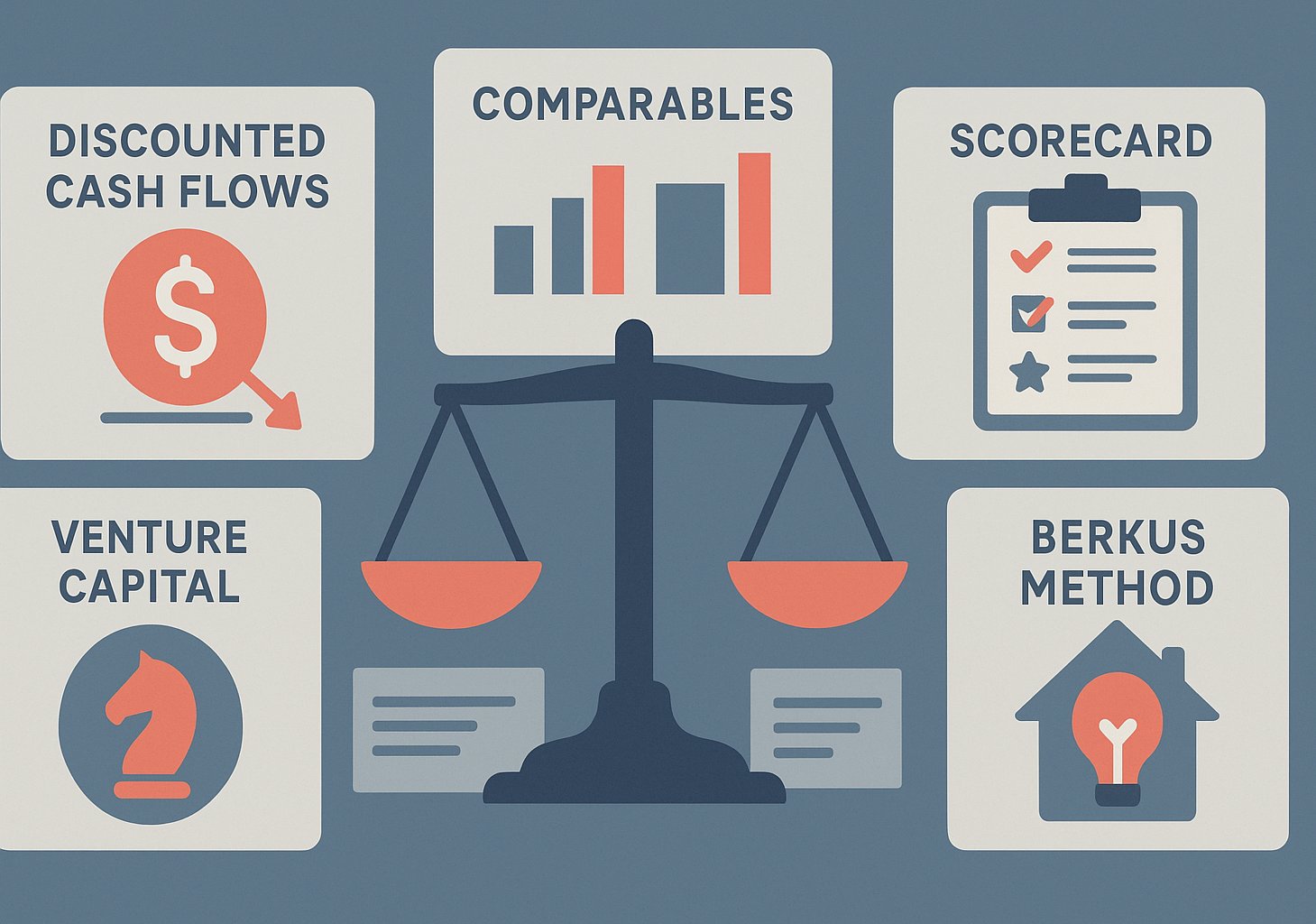

In the world of equity crowdfunding, your valuation isn’t just a number—it’s a story. It represents your vision, your traction, and your belief in the company’s future potential. But it also reflects how investors perceive your credibility, your understanding of the market, and your financial realism. For founders, justifying a valuation is one of the most delicate and decisive aspects of running a successful crowdfunding campaign. Set it too high, and you risk alienating investors. Set it too low, and you might sacrifice long-term equity for short-term gains.
Understanding What Your Valuation Represents
Valuation isn’t just about what your company is worth today—it’s about what it can become tomorrow. In crowdfunding, valuation serves both as a financial indicator and as a psychological anchor. It tells investors how much ownership they’re getting for their money, but it also signals confidence, ambition, and market position. To justify your valuation, you need to understand what drives it. Factors like traction, market size, business model, team experience, and intellectual property all play critical roles. Revenue-based valuations rely on measurable data—recurring income, profit margins, and growth rates. But early-stage startups without revenue often lean on projections, comparable company analysis, or intellectual capital. What many founders overlook is that valuation is both quantitative and emotional. Investors want numbers, but they also want narrative. They want to see that your business model can scale, that your market is expanding, and that you’re building something defensible. They also want to feel that you, as a founder, understand your numbers inside and out.
Grounding Your Valuation in Market Reality
One of the first mistakes founders make is basing valuation purely on internal optimism rather than external evidence. To justify your number, you must connect it to real-world benchmarks. Research comparable startups—especially those in your industry, stage, and geography—and analyze their valuations, revenue multiples, and investor expectations. For example, if SaaS startups at your stage typically raise at 6x to 10x their annual recurring revenue (ARR), using a 20x multiplier without justification can appear unrealistic. Instead, focus on data points that ground your valuation in logic: average customer acquisition cost (CAC), lifetime value (LTV), churn rate, and month-over-month growth. These metrics give investors a framework for understanding why your company deserves its price tag.
Investors respect founders who show awareness of market norms while articulating why their company is an exception. Maybe your technology has unique defensibility. Maybe your team has a track record of successful exits. Maybe your user engagement outpaces competitors. When you combine industry context with performance data, your valuation feels reasoned, not arbitrary.
Turning Traction into Validation
Numbers speak louder than narratives, but together they tell an irresistible story. One of the most effective ways to justify valuation is through traction. Every piece of measurable progress—revenue growth, user adoption, retention rates, or strategic partnerships—strengthens your case.
Crowdfunding investors are drawn to momentum. If your product is already in market, show how quickly it’s gaining adoption. Highlight milestones like beta launches, customer testimonials, and pipeline deals. If you’re pre-revenue, emphasize early indicators such as waitlist size, social engagement, or conversion rates from pilot programs.
Traction transforms potential into proof. It reassures investors that your valuation isn’t based on wishful thinking but on demonstrated progress. A startup showing 25% monthly user growth or hitting $30,000 in recurring revenue can justify a valuation that might otherwise seem ambitious. Validation through traction creates the bridge between aspiration and evidence.
Communicating Growth Potential Clearly
While current traction matters, future potential is what truly excites investors. Crowdfunding investors are buying into tomorrow’s success, not just today’s achievements. That means your valuation must reflect a clear path to growth, backed by credible projections and strategic reasoning.
Investors will ask: How big can this get? To answer, show a well-researched market opportunity and how you plan to capture it. A detailed growth strategy—covering sales channels, marketing initiatives, partnerships, and product development—illustrates scalability. Combine this with realistic financial forecasts that show how today’s investment fuels tomorrow’s expansion. But be careful: overinflated projections can erode trust. Investors know that not every startup grows exponentially overnight. They want ambition grounded in logic. If your valuation suggests a tenfold return within a few years, make sure your growth assumptions can withstand scrutiny. Transparency and credibility are far more persuasive than exaggerated optimism.
A compelling valuation story links your present performance to your future vision through a logical, data-backed progression. It answers not just what your company is worth now, but what it’s becoming—and why investors should want to be part of that journey.
Showcasing Team Strength and Execution Ability
Behind every valuation is a team expected to deliver results. Investors often value execution even more than the idea itself. A brilliant concept in the hands of an inexperienced team rarely inspires confidence, but a proven, adaptable team can justify higher valuations even in competitive spaces.
When presenting your team, highlight expertise, complementary skill sets, and measurable achievements. If your leadership includes individuals who have scaled or exited startups before, that experience adds significant weight. Advisors or early backers with strong reputations can also elevate perceived credibility. Execution is the hidden multiplier in valuation. Founders who demonstrate operational efficiency, data literacy, and resilience under pressure signal to investors that they can turn projections into performance. In crowdfunding campaigns, where investors often rely on limited information, showing a strong, capable team can make all the difference.
Using Transparency and Data to Build Investor Trust
Crowdfunding investors may not have the same due diligence capabilities as institutional investors, but they expect the same honesty. Transparency is one of the most powerful tools for justifying valuation. By openly sharing your metrics, methodologies, and assumptions, you invite investors into your reasoning process.
Provide clear documentation for your financial models and explain the logic behind your numbers. If your valuation is based on future earnings potential, show exactly how those earnings are projected and what variables you’re assuming. Investors don’t mind uncertainty—they mind vagueness.
Transparency also builds credibility when addressing challenges. If your revenue is early-stage or your market untested, acknowledge it and explain how you’re mitigating those risks. Founders who own their vulnerabilities demonstrate integrity. That honesty can turn skeptical investors into loyal supporters. In equity crowdfunding, perception is everything. When investors see detailed metrics, thoughtful analysis, and candid communication, they feel respected and informed. That sense of trust can justify a valuation as effectively as any financial model.
Learning from Overvaluation Pitfalls
Founders sometimes view high valuations as a badge of honor. But in reality, overvaluation can backfire—both during and after a raise. A high valuation sets lofty expectations that must be met or exceeded in subsequent rounds. If growth slows or revenue projections fall short, future investors may demand down rounds, diluting early supporters and damaging credibility. A better approach is strategic realism. Rather than focusing on achieving the highest valuation possible, focus on achieving one you can confidently defend and grow into. Investors appreciate founders who prioritize sustainability over vanity metrics.
Moreover, right-sized valuations foster long-term alignment. When investors feel they’re getting fair value, they become advocates rather than skeptics. Their enthusiasm helps amplify your message, attract future capital, and solidify your brand’s reputation in the crowdfunding ecosystem. Ultimately, the goal of valuation isn’t to inflate—it’s to align. The best valuations create win-win scenarios where founders secure growth capital while investors feel empowered by their ownership stake.
Turning Numbers into Narrative
At its core, valuation justification is storytelling with numbers. It’s the ability to weave data, strategy, and vision into a cohesive narrative investors can believe in. Every piece of your business—from your user base to your team to your growth trajectory—should connect back to why your company deserves its current and future worth. A well-justified valuation transforms investor perception. It turns hesitation into enthusiasm and skepticism into confidence. It communicates that your startup isn’t just another hopeful project—it’s a calculated, promising opportunity built on solid ground. When done right, valuation becomes not just a metric, but a magnet. It attracts the kind of investors who understand your mission, share your ambition, and see the same potential you do. The key is clarity, transparency, and humility—the balance between knowing your worth and earning belief in it. In the fast-paced world of crowdfunding, where hundreds of startups compete for attention, the founders who master this art stand apart. They don’t just defend their valuation—they inspire it.